Saturday, 27 February 2016

Third Sunday of Lent 2016 ~ Luke 13:1-9 “Bear Fruit”

The people in the Gospel today are wondering if the Galileans who were killed by Pilate had died because they deserved to. We can empathise with them as we know too well of accidents and tragedies of all kinds where we might ask the same question. Jesus insists that they have not done anything wrong. Their sudden death challenges those still alive to live to the full and to bear much fruit because life can end suddenly, life is fragile, no one is indestructible. 

Climate Change affects us all. Climate injustice occurs when people who have done little or nothing to cause climate change are suffering the most from its effects. It is the greatest injustice of our time as it is the world’s poorest countries who suffer the most from the changes in our weather systems. In Ireland we recall the devastating storms of 2013 which caused so much destruction along our West Coast. We have the resources to cope, for now. In countries like Kenya and Malawi, these resources are simply not there and the effects of storms and droughts are catastrophic. Let us pray today that we hear the call of the Gospel to bear fruit, not to be inactive, not to be complacent when it comes to reducing our carbon footprint. The Galileans died because of Pilate, but the greater ‘sin’ here becomes inactivity.


“Common destiny beckons us to seek a new beginning… Let ours be a time remembered for the awakening of a new reverence for life, the firm resolve to achieve sustainability, the quickening of the struggle for justice and peace”. (Pope Francis, Laudato Si’, 207). 


Second Sunday of Lent 2016: Luke 9:28-36, (37-43) “Called to transformation”


Jesus takes the disciples up to the mountain top in today’s Gospel. In that space, they have a profound experience and are invited to see Jesus for who He really is. One can empathise with the disciples in this story as they do not want to leave that space. We all have had experiences that we want to last forever and are hugely disappointed when they are over. However, commitment to any cause very often involves a long and painful journey. Like the disciples in the Gospel today, there is a ‘hook’ moment, when Jesus or any leader shows us something different, a vision, a dream, something that is so wonderful and hope-filled that we commit there and then to making it happen. Then we realise that there is much work to be done and the path will not be so easy. Obstacles will arise, people will fall away, enthusiasm will waver, there will be set backs and disappointments. We are being called to commitment today, to the more difficult path. We are being called to open our ears and eyes to the Gospel message of transfiguration, of transformation.

Per capita, Ireland is one of the highest polluters in Europe. This is not a statistic to be proud of. We know we can do better. Coming down from the mountain, like the disciples, means making changes in our lifestyles that lower each of our carbon footprints. We start with ourselves.

 “We require a new and universal solidarity… All of us can cooperate as instruments of God for the care of creation, each according to his or her own cultures, experience, involvements and talents.’ (Pope Francis, Laudato Si’, 14)


First Sunday of Lent 2016

14th February 2016 ~ Luke 4:1-13 “Trust the wilderness”

The temptations are not just an embarrassing episode in the life of Jesus but are an integral part of his mission. Jesus is tempted to eat when he is not supposed to eat, to take the easy route of power through exploitation, when that is not His way. Ultimately, God is in control here; this wilderness is ‘Spirit’ led. And so it is for us. When it comes down to it, each of the temptations are about the same thing, our ability to trust in God. This should not direct us towards complacency but to listening.
We listen to God’s Word and this year’s Trocaire campaign is urging us to listen to what God is saying through the Book of Creation; to trust in those signals and signs. Listening to the story of Teresina this year, we hear of an effect of climate change that is often overlooked: a family forced apart because of dry land. This past year we have seen large movements of refugees around the world. We know that the next generation of refugees will be climate refugees. It does not have to be this way. As we enter the ‘wilderness’ of Lent, let us spend time with the temptations in the Gospel today and hear the call to ‘trust’. Trust what God is trying to tell us through the Book of Creation. It is in the wasteland that we find the signs of God’s renewal.


‘I urgently appeal for a new dialogue about how we are shaping the future of our planet. We need a conversation which includes everyone, since the environmental challenge we are undergoing, and its human roots, concern and affect us all’. Pope Francis, Laudato Si’, 1, 14

February 7th Reflection 2016

7th February Luke 5:1-11 “Put out into the deep”
Jesus is preaching at Lake Gennesaret (the Sea of Galilee) in today’s Gospel. This is Luke’s account of the calling of the First Disciples which takes place in the context of a miraculous catch of fish. Jesus is using Simon’s boat as a sort of platform from which to address the crowds who had gathered around him. Already Jesus is gaining popularity and the crowds are ‘pressing’ near to him. Clearly they see something in Jesus that is attractive and fulfilling.
Simon is most likely being polite when he agrees to try again for a catch, possibly thinking that Jesus should leave the fishing to the professionals. Simon obeys, takes the risk, lets go of his pride, and the result is an overwhelming catch of fish. It can be hard to trust others at times; it can be difficult to let go of what is familiar to us. We are constantly being challenged to do this. The big challenge is to trust that God knows what God is doing and is constantly urging us to pull away from the shore.


“A boat is safe in the harbour; but this is not the purpose of a boat” ~ Paulo Coelho

Saturday, 23 January 2016

Sunday 24th January '16 ~ Luke 1:1-4, 4:14-21

The prologue to Luke’s Gospel is almost like the opening credits of a major blockbuster movie, there’s something exciting about it. We don’t really know who Theophplis was, possibly a patron of Luke’s, but his name also means ‘Lover of God’ and in that sense this Gospel is addressed to all ‘lovers of God’.

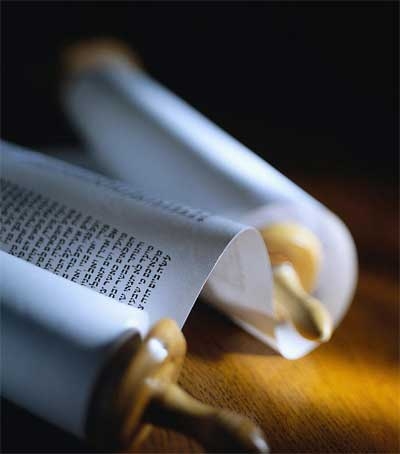
In the synagogue, Jesus is handed the scroll from Isaiah. It is one of the most powerful passages in the New Testament as Jesus sets out his mission, his manifesto. The uncomfortable truths contained within the passage cause the crowd to reject him. We know that in our world today good news has still to reach the afflicted, captives still await liberation, the oppressed are not free. So this is not a passage read in the past, it is very much alive, very much a vision for all to have and to work towards. Just as the scriptures are fulfilled in Jesus, they are also fulfilled in each of our lives. There are many causes we can be involved in, the refugee crisis, climate justice, homelessness, neighbourliness, community involvement. Wherever we are, in our own small ways, we can strive to make this dream a reality.


“Lord of the universe, look in love upon your people. Pour the healing oil of your compassion on a world that is wounded and dying. Send us out in search of the lost, to comfort the afflicted, to bind up the broken, and to free those trapped under the rubble of their fallen dream.” (Sheila Cassidy)

Saturday, 16 January 2016

World Day of Migrants & Refugees ~ Sunday 17th January 2016

During this past year we have watched, in almost disbelief, as hundreds of thousands of people flee their homes in Syria and other parts of the world.  The image of three year old Aylan Kurdi, washed up on a beach last August, as his family attempted to reach safety, caused complete outrage around the world. For a while we reacted and acted and called for an immediate response from our governments. Not since WWII have so many people been forced from their homes. So much can be said today about this crisis and we must continue to ask ourselves: how can we respond?
We must always be ready to welcome the refugee and migrant. Our faith is one of hospitality, compassion and mercy. In the Gospel today, Mary urges the disciples to ‘do whatever He tells you’ and we see Jesus perform a sign that shows he has come for the transformation of that which causes barriers to God’s Kingdom. 
The refugee crisis may challenge us but as people of the Gospel of Mercy, we must respond: “Mercy nourishes and strengthens solidarity towards others as a necessary response to God’s gracious love…Each of us is responsible for his or her neighbour: we are our brothers’ and sisters’ keepers, wherever they live.  Concern for fostering good relationships with others and the ability to overcome prejudice and fear are essential ingredients for promoting the culture of encounter, in which we are not only prepared to give, but also to receive from others.  Hospitality, in fact, grows from both giving and receiving.” (Pope Francis)

 
Hundreds gather on Sandymount strand, Dublin last year to spell out 'Refugees Welcome' #solidarity


Sunday 10th January ~ Baptism of our Lord

In Luke’s account of the baptism of Jesus we hear that Jesus was at prayer after his baptism, when the heaven opened and the Holy Spirit descended like a dove. This is main focus of Luke’s account of this story, he is the only Gospel who says that Jesus was at prayer before ‘heaven opened’ and God’s voice was heard. A call to do God’s work can often be preceeeded by a deep prayerful experience of God. Luke’s focus is on the experience of Jesus in this account but we are also called to see the revelation of God in ourselves and in others. Perhaps you can recall when you suddenly saw a divine spark in someone you know or noticed a change in yourself because of a deep experience.

We can recall moments in our own lives when we experienced God tenderly and lovlingly saying to us, ‘you are my son/daughter’; ‘you are my beloved’; ‘my favour rests on you’. Very often experiences such as these are simple events. They can also call us to a greater commitment to our faith and our relationship with God.


“The descent into the waters of our spirit, is a journey into the presence of divinity…all human beings are children of God but not all live in the awareness that there is ‘that of God’ within them” (W.L. Wallace)

Wednesday, 6 January 2016

January 6th ~ The Feast of the Epiphany

Whether they were philosophers or astrologers, the Wise Men were certainly ‘seekers’. Looking to the skies for signs and guidance, with their hearts and minds set on finding God, the Wise Men embark on an amazing journey, determined. The thought of some new religious insight, a change or even a threat, forces Herod to call together all those considered to have authority on religious matters.  All are concerned with their own power and afraid of how the new could affect their traditions and structures; the possibility of a new King is too much for them. In contrast to this, the Wise Men are humbled before the leaders and genuinely seek to learn from them. We are told that the sight of the star ‘filled them with delight’.


This story has so much to say to us today, we are all on a similar journey, striving for the same goal: ‘going into the house the saw the child with his mother Mary, and falling to their knees they did him homage’. This scene describes a moment of great joy, of grace and is in total contrast to the scene of Herod frantically calling the religious leaders together: God is found in the simple spaces. The Wise Men represent all peoples, all cultures, a clear message that God is for all regardless of nationality, culture and even faith. Today we might think about our own journeys to moments of epiphany. What ‘star’ had brought us there? What gifts did we leave there? What gifts were we given there?


Sunday 3rd January ~ In the beginning was the Word...

There is a very deep teaching in today’s reading, taken from the opening of St. John’s Gospel. There is so much depth here and much to reflect on. God is described as the Word and as Light. The Word is that divine energy, Creator of the universe, Being, God, Father and Mother of all things.  John tells us that no one has ever seen God, but through Jesus, God has been made known. There are wonderful lines in the passage, written for all of us, to convey the message that God lives among us yet even though God created the world, the world still does not know him. God is involved in humanity; God is not somewhere out in the universe watching; God is involved with us. Today can you spend some time reflecting on the deep words of this passage? Perhaps reflect on where have you seen God in the world around you? Where is God present for you? Invite God more deeply into your life.


‘Lord, humanity today wants to live independently of you, and even Christian speak as if you created the world and then left it to its own devices. We thank you for the teaching of St. John reminding us that all things come to be only because you speak a Word, and that every single thing that exists today has its being because that Word continues to be spoken in it, and the only way that anything which has come to be has life today is because your Word lives within it.’ (Michel de Verteuil)

Sunday, 29 November 2015

First Sunday of Advent 2015 (Luke 21: 25-28, 34-36)

Happy New (church) Year! Today is the First Sunday of Advent and we begin the season of ‘waiting’. 

The Gospel today has powerful (and perhaps distressing) images of great signs that will appear. For many of us this year we saw lots of signs that Christmas was coming, even as far back as September, which is more distressing than any of the images in the Gospel today. Some people love that feeling of expectancy, of waiting for someone or something to arrive. It can be quite an exciting time or even one of anxiety. Very often we are on high alert during such a time, and often quite creative. We are asked to enter into the season of preparation, to celebrate God in our lives and in our world. It is a season of great joy and of hope and while waiting is not always seen as a good thing, it can be an interesting time of growth. So, what will our preparations be like? In the middle of the crazy, busy days in the run up to Christmas, can we stop and invite God into our hearts and lives once more?

“As with madness we prepare for this festive time of year, as we rush and count the days, Advent passes in a haze, So may our feet take us to places where we will meet You” (Janet Lees)

Friday, 20 November 2015

Sunday November 22nd ~ Christ the King

The Feast of Christ the King is the final Sunday in the liturgical calendar. In the Gospel today, Pilate is concerned with what type of King Jesus is and what kind of Kingdom he is talking about? To understand what type of kingship Jesus is talking about we need to lay aside a lot of the cultural baggage that we have about Kings and Kingdoms. There are no palaces, no pomp and ceremony involved here. Jesus’ Kingdom is concerned with justice for the weak and the oppressed.

At our baptism we were each anointed as ‘priest, prophet and king’ and therefore we share in this kingship that Pilate is wondering about. We are called to show the world that Jesus’s followers are concerned with love and service of others; that Jesus’ Kingdom is built on a different kind of foundation. With so much brokenness in the world we are called to transformative service. There are no shortage of causes: the refugee crisis; homelessness; climate justice…


At the end of this month, world leaders gather in Paris at ‘COP21’ to try to come to a universal agreement on addressing climate change. We pray that the ‘Kings’ and ‘Presidents’ of this world take strong action to protect our planet. “We pray for the representatives of the nations meeting in Paris, and in every government everywhere—and all business leaders and consumers—that we will see nature as a magnificent book in which God speaks to us and grants us a glimpse of his infinite beauty and goodness. (LS 12)” #pray4cop21 


Sunday, 15 November 2015

Sunday 15th November 2015 ~ Mk 13:24-32

Next week we come to the end of the Church’s liturgical year and therefore on this Sunday the readings traditionally speak about the end of the world and the final coming of Jesus. There is a lot of symbolic language in today’s Gospel, some of it which may distress us. The opening verses tell us of great destruction of things that we know we cannot survive without – the sun, the moon. The Gospel goes on to speak about the gathering of a great community. People in Jesus’s time believed that the end would come in their life-time. Jesus says that no one will know when this is to happen and that it is not for us to worry about. What we should be concerned about is how to live every day in God’s love and service.


Today, we might recall times where we thought our worlds had ended because we lost something so important to us or we were suffering in some way. During that time it may have seemed like nothing would be the same again, but it was temporary; a new or different way of life was opened up to us as a result. The parable of the fig tree in the middle of this Gospel speaks to us about life and hope. In the midst of winter a small sign of hope was there even though we may not have seen it. 
‘When you see these things taking place, you know that he is near.’ (Mark 13:29)


Sunday, 8 November 2015

Sunday November 8th 2015 ~ The Widow's Mite


In today’s Gospel, Jesus is courageously speaking out against the hypocrisy of the so-called ‘religious’ of his time. This passage is encouraging all his followers to engage in a reality check. The hypocrisy of the scribes is in total contrast to the humility and generosity of the widow in the second part of the Gospel. She gives not of what she has to spare, but everything she has. She is free. We don’t have to restrict this example to money either.  

At the end of this month, a vitally important meeting is taking place in Paris called COP21. World leaders will gather to try to settle on a universal agreement on climate change action. It is a hugely difficult task, one that has not been achieved before. We are asked to pray and to continue to put pressure on our governments to take real action on climate change. The widow gave her all in the Gospel today and we are challenged to model her behaviour rather than the behaviour of the ‘elite’ of the opening verses. 


You can join the march on November 29th @ 2pm @ The Custom's House, Dublin, to make your voice heard on climate justice. Encourage our leaders to make a strong stand at COP21 in Paris this Nov/Dec.


“The idea of infinite or unlimited growth... is based on the lie that there is an infinite supply of the earth's goods, and this leads to the planet being squeezed dry at every limit. Yet all is not lost. Human beings, while capable of the worst, are also capable of rising above themselves, choosing again what is good, and making a new start." (Pope Francis ~ Laudato Si)

Sunday, 1 November 2015

All Saints Day ~ Matthew 5:1-12.

Today we celebrate All Saint’s Day and to celebrate this feast the Gospel we read is The Beatitudes. It is an interesting passage to spend time with. Jesus is not moralising in this text, he is not telling us what to do. He is stating facts and we are invited into each Beatitude and given space to draw our own conclusions. The Beatitudes may shock us, but they force us to think and to ponder the paradox in each statement. There is much human experience within each one and as you read them you may recognise your local or ‘urban saints’.

This week can you spend time with each beatitude? There are seven so one per day is totally doable. Who are the peacemakers around you? Who are those who are persecuted? Who is mourning? The beatitudes call us to live life more fully, to see all as connected. Saints are all around us, pointing the way for us, teaching us something about God through their lives. They persevere in all they do for their families and communities, especially those on the margins. They are the blessed ones.


“Saints make our hypocrisy so apparent that we want to change our lives – not because of guilt but because we want to be alive, we want to be more like Jesus…[they] leave us the scent of God, the aroma of Christ. In God’s flirting with humanity, God occasionally drops a handkerchief – and these handkerchiefs are called saints” (Shane Claiborne). 


Saturday, 26 September 2015

Sunday 27th September 2015 ~ Remove the Stumbling Blocks

Earlier in the Gospel of Mark the disciples were arguing about who amongst them was the greatest; in any group there is bound to be the occasional dispute! Today they are complaining that people, who are not part of the gang, are performing works in Jesus’s name. The disciples are eager to pass judgement, yet Jesus is asking them not to focus so much on how other people are a stumbling block to the Gospel, but to look inwards and ask themselves how are they doing? What stumbling blocks do they put in their way or in the way of others?

On 4 October we will celebrate the feast of St Francis of Assisi, bringing ‘Creation Time’ to a close. Some parishes have a blessing of animals; others have ‘Eco-Sunday’ and some have achieved the ‘Eco-Parish’ award from Eco-Congregation Ireland. (If your parish is not on the list, maybe you can gather people together to start the process: http://ecocongregationireland.com/eco-tips.)

It is easy to point the finger at major corporations and poor leadership and think that there is nothing we can do about climate injustice. As this season of ‘Creation Time’ draws to a close, let us really celebrate by committing to small actions as parish communities, being part of the solution and not a stumbling block.

‘Common destiny beckons us to seek a new beginning… Let ours be a time remembered for the awakening of a new reverence for life, the firm resolve to achieve sustainability, the quickening of the struggle for justice and peace, and the joyful celebration of life’.
Pope Francis, Laudato Si’, 207.

Monday, 21 September 2015

"Who is the greatest?" ~ Sunday 20th September 2015

In Pope Francis’s recent encyclical on the environment, Laudato Si’, he acknowledged that for so long human beings have treated the planet as if it were there solely for our use and exploitation, as if we were the greatest. He urges us to see the deep connectedness that exists with nature. ‘Nature cannot be regarded as something separate from ourselves or as a mere setting in which we live. We are part of nature, included in it and thus in constant interaction with it.’ (139). Pope Francis refreshingly speaks of an ‘integral ecology’; that dealing with climate change involves an approach to combating poverty, restoring dignity to the excluded and at the same time protecting nature. We can no longer treat any of these in isolation.

We are all an integral part of nature and are called to respect nature not simply because of its use for us, but because of the countless relationships that exist between the environment and ourselves. The earth is calling to us to act. We can make a real difference to people’s lives through the small choices we make: the promise to live more simply and more sustainably. It is up to us and we can choose to be part of the solution rather than the problem. Like the disciples in today’s Gospel, we are called to examine how we relate to one another, and that includes our relationship with nature. We must start listening to what the earth is saying to us, and like the child in today’s Gospel, respond with humility.


Friday, 11 September 2015

Sunday September 13th 2015 ~

According to the ‘World Giving Index’ Ireland is listed as the fourth most generous country in the world. There is no denying the generosity of the people of this country, especially in times of crisis and in spite of tough economic situations. The injustice currently threatening our world will not be solved by charity giving alone. During this special season of ‘Creation Time’ we are being asked to reflect deeply on how we can come together as local communities to tackle climate change. We are being asked to reflect on how we can live more sustainable lives and encourage others to do the same.

In the Second Reading today St James encourages us to look at our attitudes and actions and how they can affect those around us: ‘I, by my works, shall show you my faith’. We have a responsibility to be a positive influence in the world.
 Can we as parish communities reflect together on these important issues? Do we recycle; do we support local produce and therefore local communities; is our parish FairTrade and if not, how can we get started? How is our use of green spaces in our parish? These small actions can be a prophetic example to others, where we can say to our communities:

‘We require a new and universal solidarity… All of us can cooperate as instruments of God for the care of creation, each according to his or her own cultures, experience, involvements and talents.’
Pope Francis, Laudato Si’, 14

Wednesday, 2 September 2015

Sunday 6th September "Creation Time"

'EPHPHATHA’ (Mark 7:31-37)
Between 1 September and 4 October (the feast of St Francis of Assisi) Christian churches celebrate the season of ‘Creation Time’. It is an opportunity for us to reflect on the gift of our world and to look at our relationship with the planet. There is no better time for us as individuals and as parish communities to consider our responsibilities to act on climate change, especially in light of Pope Francis’ recent encyclical Laudato Si. 

In the Gospel today, as Jesus opens the ears of a deaf man, he says ‘Ephphatha – Be Opened’. May our ears be opened to the cries of the earth and to the poor who suffer the most because of climate injustice. What a wonderful and prophetic action it would be in celebration of ‘Creation Time’ if each parish community committed to beginning a JPiC (Justice, Peace & Integrity of Creation) group? Or perhaps thinking ahead to the feast of St Francis, ask ourselves how can we as parish communities celebrate the gift of creation? Great things can happen when small groups of people come together and act locally. How will your parish celebrate ‘Creation Time’? (For more info: http://ecocongregationireland.com/)

‘I wish to address every person living on this planet… I urgently appeal for a new dialogue about how we are shaping the future of our planet. We need a conversation which includes everyone, since the environmental challenge we are undergoing, and its human roots, concern and affect us all’.
Pope Francis, Laudato Si’, 1, 14

Sunday, 17 May 2015

May 17th: Ascension, Mark 16: 15-20

And the Lord worked with them…

The fear experienced by the women and the disciples at the end of Mark’s Gospel shows us that even when we have profound spiritual experiences, fear can often force us into silence. The account of the ascension in Mark which we read today urges us not to be afraid but to go out. Mark’s Gospel is a Gospel for hard times, for those who are struggling. This ending aims to empower us and give us courage even when the world around us tells us otherwise. It urges us to “Go” and tell.

The disciples ‘went out’; bringing ‘good news’ everywhere. We too are called to be Easter People because we live with an assurance that pain, death and grief will not have the last word and we dare to shine the light of hope and wholeness into the empty tomb. Where have you encountered Easter People in your own life? How do you communicate this risen Jesus to others? How can we be Easter People to others? This is the challenge of the Gospel today. To bring Christ’s love and assurance to all we meet.

‘God has given us the power to create beauty, to make another smile, to be a healing presence in someone’s sorrow, to bring justice to the oppressed, to console those in difficulty, to bring peace and joy to others, to help those in need, to laugh and enjoy life, to do good and turn from evil, to forgive those who have hurt us, and, most of all, to love’ (Iris Perez)


May 10th: John 15:9-17

Fruit that will last
Friendship is a beautiful thing, where people share their dreams and hopes, their desires, plans and worries. It is an intimate relationship.  What does it mean for you today to hear that Jesus is calling you his friend? That you are loved by him? These are questions worth thinking about. He is telling us these things so that we may also go and love others and share this joy with them. To abide in Jesus we are called to live out the love that he has taught us, the love that he shares with the Father, the love that he has shared with us. This love brings great joy and demands that we share it with others.

This love that he speaks about is no ordinary love, it is agape love, that is, unconditional love, regardless of who you are, where you are from or what your circumstances might be. It is the love we, as Christian communities, are called to share. It is the greatest commandment of all. If the world is wondering what God is like, our Christian communities are called to be witnesses to that love. It should be so recognisable from the ‘outside’ that people should be able to say, look at them Christians loving everyone. It is a radical love, one that does not judge or condemn, a love that is inclusive of all. Is it recognisable in our own Christian communities?