Jesus never condemns sinners. In today’s Gospel he
refuses to condemn the woman, caught in adultery, to
the death penalty as was demanded by Old Testament
law (the man would have been subject to the same
law by the way!). Once again the Pharisees are trying
to trick Jesus. We may wonder what Jesus was
writing on the ground as they continued to question
him, but he delivers the winning statement in this
debate and the condemners are forced to leave one
by one.
We live in a stone-throwing society which cares little
for the circumstances that cause people to make
wrong choices. We want someone to blame, and the
sooner the better. Those who accuse others often
do so from a lack of self-knowledge and laziness,
because it is very easy to be negative. We have all
had a part to play in creating climate injustice, but the
blame game won’t solve the issue. We need to be
proactive and challenge complacency on this issue
wherever we see it. We make mistakes but we can
always start again. When we relate compassionately
to those who are in difficulty we can rediscover our
common humanity.
"Yet all is not lost. Human beings, while capable
of the worst, are also capable of rising above
themselves, choosing again what is good, and
making a new start, despite their mental and
social conditioning … No system can completely
suppress our openness to what is good, true and
beautiful, or our God-given ability to respond to
his grace at work deep in our hearts. I appeal to
everyone throughout the world not to forget this
dignity which is ours. No one has the right to take
it from us.
Laudato Si’, 205
Showing posts with label trocaire. Show all posts
Showing posts with label trocaire. Show all posts
Saturday, 12 March 2016

Saturday, 28 March 2015
Fifth Sunday in Lent: John 12:20-33 “Now the hour has come for the Son of Man to be glorified”
There is a very short
parable in today’s Gospel describing a seed which has fallen on the ground and eventually
dies. It may remain a single seed or it may yield a rich harvest. This concept
of losing what one has to give way to something new and life giving is
frightening for some. We get so attached and lifestyle changes are tough.
In this passage Jesus
knows that his hour has come; this is his crisis moment. But Jesus’ time of
anguish moves from a cry of ‘save me’ to one of glorifying God ‘let it be as You not I would have it’. We
are at an ‘hour’ in terms of climate justice. This is the time where big
decisions and commitments must be made and there is no other option but to opt
for life; to listen to God’s will, not ours. The priorities of wealthy nations
must change, must turn outward and take risks if we are all to experience peace
and security.
We remember the horrendous
storms which battered Ireland last year and which will continue to do so as our
climates change. We are called to be stewards of the earth, ‘everything has been entrusted to our
protection, and all of us are responsible for it’ (Pope Francis).
For us to
be true stewards means campaigning for legislation at national level and
different choices at a personal level.
“I would like to ask all those who have positions of responsibility in
economic, political and social life, and all men and women of goodwill: Let us
be protectors of creation, protectors of God’s plan inscribed in nature,
protectors of one another and of the environment.” Pope Francis.
Sunday, 8 March 2015
Zeal for your house will consume me ~ Third Sunday of Lent (John 2:13-25)
 You can understand why Jesus is angry with those selling
goods in the market place. The
goods sold in the Temple markets were used in sacrifices so that people could meet the requirements to be ‘closer’ to God. This model needed challenging. They
have turned what should be a place of sacredness into a place where what is
important is monetary value and exclusion. Jesus
is ‘overcome’ with fierce love and passion because of the injustice he sees
before him.
You can understand why Jesus is angry with those selling
goods in the market place. The
goods sold in the Temple markets were used in sacrifices so that people could meet the requirements to be ‘closer’ to God. This model needed challenging. They
have turned what should be a place of sacredness into a place where what is
important is monetary value and exclusion. Jesus
is ‘overcome’ with fierce love and passion because of the injustice he sees
before him. 
What temples have
we turned into market places today? Our world is driven by consumerism and
profit at the expense of our environment and at the expense of the resources of
the world’s poorest people. The Book of Creation is now speaking to us to stop
making this house a market place. We don’t have to look too far to see how
climate change is having adverse affects on our weather systems here in Ireland
and in the poorest regions of the world.
Let us pray this
Sunday that ‘zeal for Your house will consume’ us and that we will take the
necessary steps to ensure a more sustainable world for all. World leaders
are working towards a global treaty on climate change but they are not agreed
on how to cut emissions to sufficient levels in order to reduce global
temperatures. They need encouragement.
 “May God bless us with anger at injustice, oppression, and exploitation of people, so that we may work for justice, freedom, and peace. May God bless us with tears to shed for those who suffer from pain, rejection, hunger, and war, so that we may reach out our hands to comfort them and turn their pain into joy. And may God bless us with enough foolishness to believe that we can make a difference in this world, so that we can do what others claim cannot be done, to bring justice and kindness to all our children and the poor”. (Franciscan Blessing)
 Coming down the mountain ~ Second Sunday of Lent (Mark 9:2-10)

We journey to the mountain top in the Gospel this
Sunday as Jesus invites Peter, James and John to join him and be witnesses to his
transfiguration; to seeing Jesus for who he really is. The people of Sebeya in
Ethiopia once lived in a region where mountain tops were green and covered in
vegetation. Today, the people of Sebeya are confused as to why their rains have
stopped and why a land once full of vegetation is now dry. The people of Sebeya
live a simple life and have played no part in causing their weather systems to
change. They are experiencing the effects of climate change, the cause of which
lies with the lifestyles of rich nations thousands of miles away. This is a
great injustice.

“Creation is not a property, which we can rule over at will; or, even
less, is the property of only a few: Creation is a gift, it is a wonderful gift
that God has given us, so that we care for it and we use it for the benefit of
all, always with great respect and gratitude.” Pope Francis
Thursday, 19 February 2015
First Sunday of Lent ~ Mark 1: 9-15 "Urgent Wilderness"
The Gospel today sends us out into the ‘wilderness’.
It may be a daunting concept with the ‘wild beasts’ but we need not worry. This
short passage from Mark is clear about who is in charge; it is the Spirit who sends.
Very often we need some ‘wilderness’ to help us stop and reflect on our lives
and where we are going. In this sense Lent can be
a very special season for many people and the Gospel texts offer a particular
richness that invite us to transformation and real change. Each Lent we are
invited to choose life; to choose the things
that are life giving for us and to clear out the blocks that stand in our way.
This
year we are asked to engage with the urgent issue of Climate Justice as
Trocaire’s Lenten Campaign brings us to the ‘cradle of humanity’: Ethiopia.
When we picture this amazing country we probably think of images of famine or
hunger. This biased image does not do justice to what is a vibrant country with
a reputation for amazing landscapes, an ancient culture, a diversity
of languages and food; its unique Christian churches and saints.
 We are invited
into this beautiful land this Lent, to listen to people’s stories, to hear
their struggles and to think deeply about the kind of world we want for
generations to come. Climate Change is having disastrous effects for people all
over the world and we are having a direct impact with Ireland the second
highest polluter per capita in the EU. If we do anything
this Lent, please let us think about how we can live more sustainable lives.
There is a lot to reflect on as we enter the wilderness.
We are invited
into this beautiful land this Lent, to listen to people’s stories, to hear
their struggles and to think deeply about the kind of world we want for
generations to come. Climate Change is having disastrous effects for people all
over the world and we are having a direct impact with Ireland the second
highest polluter per capita in the EU. If we do anything
this Lent, please let us think about how we can live more sustainable lives.
There is a lot to reflect on as we enter the wilderness.
“I wonder if I’ve
been changed in the night? Let me think. Was I the same when I got up this
morning? I almost think I can remember feeling a little different. But if I’m
not the same, the next question is ‘Who in the world am I?’ Ah, that’s the
great puzzle!” ( Lewis Carrol)

Friday, 18 April 2014
Some Good Friday Thoughts...
The story of the suffering and death of Jesus and the religious  services that go with Good Friday are perceived, by the majority of people in Ireland today, far removed from everyday life. This year, for the first time ever I think, I have been quite removed from the liturgical mayhem involved in celebrating the most important feasts of the Church’s year. This is due to an accident I had a few weeks back which has left me incapacitated for the next few weeks. So, while sitting at home all day instead of the usual marathon session in the parish, I have been asking myself what these three days mean to the rest of the world. You could say, I’ve been having a ‘what’s it all about Ted’ sort of day. Apparently we now live in ‘secular’ Ireland; rescued and saved from the mad Christians. Social media feeds today declared all those still participating in the ‘mad rituals’ ‘out of touch’ but comforted the population by assuring them that we [the mad Christians] would soon be extinct.
I thought I’d read the newspaper to get away from Facebook but Atheist Ireland are mightily peed off in there due to the pubs being closed; this is a terrible "affront to non-believers”. And while they probably have a point where the pubs are concerned, I could not help thinking that a national day of non-drinking probably would not do us any harm; A national ‘non-commercial day’ even or a ‘publican’s day off’. “The Good Friday ban is just one annual note in the constant background noise of religious interference in our public life” (Irish Indo).
In an effort to salvage some sort of prayer during the day, I tuned into Pray as you Go. The words ‘I thirst’ jumped out at me. I was thrown back to Malawi, where I visited in January, and I recalled the amazing and wonderful people I met in a tiny village in the Dedza region. They thirst every day. The water they use to quench their thirst makes them sick. They walk hours every day to get that water.
 Their children are constantly ill and missing school days frequently. In the next 6 years rain-fed agriculture in that region will drop by 50% due to climate change. HIV/AIDS cause further problems and heartache for many in this village.
During the day I was also drawn back to the article about the ‘Homeless Jesus’ statue. This statue, sculpted by Timothy Schmalz to bring attention to the chronic problem of homelessness in Toronto, depicts a homeless person on a bench, covered in a blanket. However, on closer inspection there is a noticeable characteristic: the person bears the wounds of crucifixion on his feet. This is Jesus, the homeless wandering preacher, asleep on a bench outside your house, outside your church. St. Michael’s Cathedral in Toronto were initially enthusiastic in having the sculpture outside their doors but after some reflection decided against it. Parishioners found it ‘offensive’; how could someone do this to their image of God? It was too ‘provocative’ and ‘not an appropriate image’. But it is real. What on earth are they talking about?
People are crucified in this world every day. Jesus shows us from the cross that suffering is very real: while we tend to focus in on the physical suffering, there was intense emotional suffering also. One wouldn’t blame Jesus if he was relieved that this public ministry episode was coming to an end. After all, it had been an epic failure up until this point and he was betrayed and let down by his closest friends in the end. How many of us have not suffered this disappointment or heartache of any kind?
Good Friday is not the end of the story. Nor is it some archaic set of rituals that have nothing to say to the world today. We can participate in services of all kinds today (some will be better than others) but we are constantly being called to the Good News, the HOPELANDIC news. (Like those who hope that the pubs open tomorrow and have a promise that they will). For Christians around the world a celebration is coming and it has a lot to tell us about our lives and the world that we live in. All things are possible.
I think about that small village in Malawi and I know that there is hope. This is the bore well that was installed by Trocaire which is providing water to hundreds of people; clean water; water that has not made anyone sick in months; that has kept a lot of children sick free and in school. That well was made possible through the people who donate to Trocaire each year. As Mandy Meade notes: ‘Never doubt that a small group of people can change the world’.
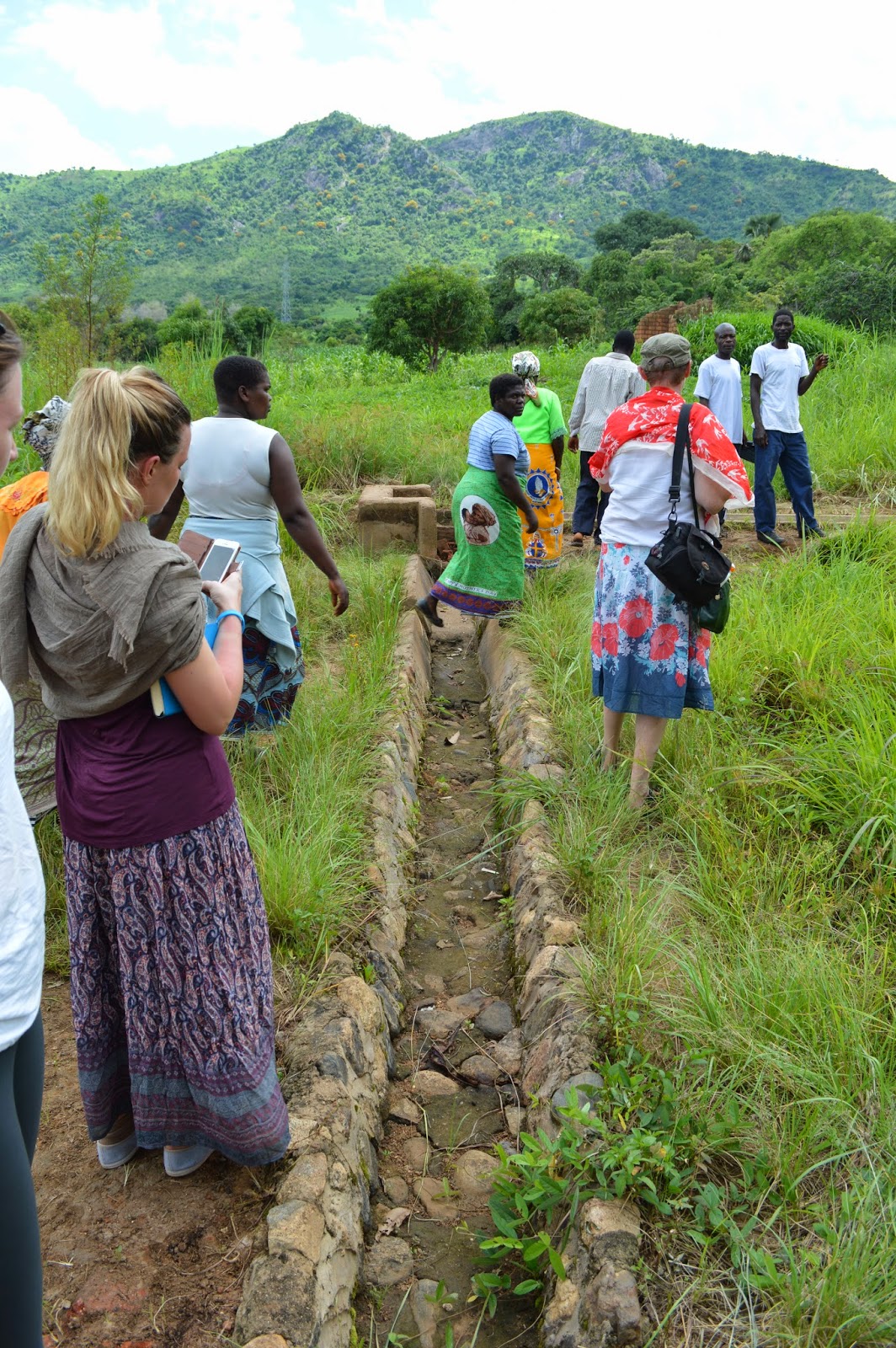
I was also thinking about the irrigation system in a village we visited one day in Malawi. Installed through Trocaire’s partners in Malawi this irrigation system has turned one community from ‘I THIRST’ into a community with two harvests a year. Water flows from the mountains three kilometres away into 28 plots of land bringing crops, feeding a fish farm, and saving the people from the annual ‘hungry season’. We see the crucifixion story in the famine and drought; but we are also called to see something greater; to be something bigger; to cause TRANSFORMATION.
The ‘Homeless Jesus’ statue also has found a home; a place where Christians are not afraid to look homeless Jesus in the eye and say – ‘this oppression; this homelessness: “It is finished”. The sculptor has even been commissioned by many parishes in the USA to bring ‘Homeless Jesus’ to their doorsteps.
These three days of the Easter Triduum are the stories of all our lives, whether we want to engage with it or not. They show the world the reality of suffering but also shine a beacon towards hope, resurrection, transformation, and change of the most unimaginable kind.


I thought I’d read the newspaper to get away from Facebook but Atheist Ireland are mightily peed off in there due to the pubs being closed; this is a terrible "affront to non-believers”. And while they probably have a point where the pubs are concerned, I could not help thinking that a national day of non-drinking probably would not do us any harm; A national ‘non-commercial day’ even or a ‘publican’s day off’. “The Good Friday ban is just one annual note in the constant background noise of religious interference in our public life” (Irish Indo).
In an effort to salvage some sort of prayer during the day, I tuned into Pray as you Go. The words ‘I thirst’ jumped out at me.


During the day I was also drawn back to the article about the ‘Homeless Jesus’ statue. This statue, sculpted by Timothy Schmalz to bring attention to the chronic problem of homelessness in Toronto, depicts a homeless person on a bench, covered in a blanket. However, on closer inspection there is a noticeable characteristic: the person bears the wounds of crucifixion on his feet. This is Jesus, the homeless wandering preacher, asleep on a bench outside your house, outside your church.

People are crucified in this world every day. Jesus shows us from the cross that suffering is very real: while we tend to focus in on the physical suffering, there was intense emotional suffering also. One wouldn’t blame Jesus if he was relieved that this public ministry episode was coming to an end. After all, it had been an epic failure up until this point and he was betrayed and let down by his closest friends in the end. How many of us have not suffered this disappointment or heartache of any kind?
Good Friday is not the end of the story. Nor is it some archaic set of rituals that have nothing to say to the world today. We can participate in services of all kinds today (some will be better than others) but we are constantly being called to the Good News, the HOPELANDIC news. (Like those who hope that the pubs open tomorrow and have a promise that they will). For Christians around the world a celebration is coming and it has a lot to tell us about our lives and the world that we live in. All things are possible.
I think about that small village in Malawi and I know that there is hope.

I was also thinking about the irrigation system in a village we visited one day in Malawi. Installed through Trocaire’s partners in Malawi this irrigation system has turned one community from ‘I THIRST’ into a community with two harvests a year. Water flows
The ‘Homeless Jesus’ statue also has found a home; a place where Christians are not afraid to look homeless Jesus in the eye and say – ‘this oppression; this homelessness: “It is finished”. The sculptor has even been commissioned by many parishes in the USA to bring ‘Homeless Jesus’ to their doorsteps.
These three days of the Easter Triduum are the stories of all our lives, whether we want to engage with it or not. They show the world the reality of suffering but also shine a beacon towards hope, resurrection, transformation, and change of the most unimaginable kind.

Saturday, 5 April 2014
Come Forth Lazarus (5th Sunday of Lent 2014)
Jesus is being called back to Bethany into a situation of death. We can think of all of those places in the world which Bethany could represent for us today: Malawi, Syria, Afghanistan, or situations of conflict in our own communities. The tomb and the bandages can represent all of those things which prevent us from being free; which cause situations of despair. We can place ourselves in various positions within this text: the disciples who don’t want to go there; Mary and Martha who are crying out to Jesus; Lazarus who has been placed in darkness, bound and restrained.
Jesus returns to the place of conflict and confronts a culture of death. He orders that Lazarus be unbound, that Lazarus come out of the darkness of the tomb and into the light. This Lent we are asked to focus particularly on the Global Water Crisis as part of Trocaire's Lenten campaign. We too are sometimes like Lazarus in the tomb when we assume that we can do nothing about a particular situation such as this; it seems too big; too impossible to solve. We can dismiss our own light and remain in the darkness.
However, today's Gospel is a story of liberation. When we feel helpless where situations of injustice are concerned, we must remember that we are full of light; we are being called out of a culture of death; we are powerful beyond measure. Never forget that. We can do small things; we can help to remove the restraints of injustice instead of sitting in the darkness. We can lobby our government on the Climate Change Act; we can be more aware of how we use the earths resources; we can tell the stories of those suffering from drought in Malawi - there is so much we can do.
“Our deepest fear is not that we are inadequate. Our deepest fear is that we are powerful beyond measure. It is our light, not our darkness that most frightens us”. Jesus is calling us out into the light in today’s Gospel. Come forth, Lazarus.
For more information on what we can do in relation to the Global Water Crisis please take a look at Trocaire's website and the "IT'S UP TO US" PAGE: www.trocaire.com/uptous


Jesus returns to the place of conflict and confronts a culture of death. He orders that Lazarus be unbound, that Lazarus come out of the darkness of the tomb and into the light.

However, today's Gospel is a story of liberation. When we feel helpless where situations of injustice are concerned, we must remember that we are full of light; we are being called out of a culture of death; we are powerful beyond measure. Never forget that. We can do small things; we can help to remove the restraints of injustice instead of sitting in the darkness. We can lobby our government on the Climate Change Act; we can be more aware of how we use the earths resources; we can tell the stories of those suffering from drought in Malawi - there is so much we can do.

“Our deepest fear is not that we are inadequate. Our deepest fear is that we are powerful beyond measure. It is our light, not our darkness that most frightens us”. Jesus is calling us out into the light in today’s Gospel. Come forth, Lazarus.
For more information on what we can do in relation to the Global Water Crisis please take a look at Trocaire's website and the "IT'S UP TO US" PAGE: www.trocaire.com/uptous


Saturday, 29 March 2014
‘I want to see, really see’ (John 9:1-41)
The man in the Gospel story for the Fourth Sunday of Lent has had his sight restored. Notice how his sight grows more clearly throughout the account until he finally worships Jesus. We can be blind in many ways through our refusal to believe that we can contribute to positive change in the world. Too often we dismiss these realities by thinking we can do nothing about situations such as the global water crisis. This is blindness. We sometimes hide from the evidence before us and take refuge in prayer. Prayer is important but we must also be open to action. What we do, what we buy, how we use the plentiful resources at our disposal; these all affect the wider global community. 
Words attributed to Oscar Romero read: ‘We cannot do everything and there is a sense of liberation in realizing that. This enables us to do something, and to do it very well.’ How can we as parish communities work for justice for our brothers and sisters who are in need? We need to see them, to see their struggle, to see the systems which contribute to this crisis. This week can you gather a small group in your parish and tell the stories used in this year’s Trócaire resource? This is one small way in which we can open our eyes and open the eyes of others. It is not simply about giving money. Today we pray that we can have our sight restored so that, like the man in the Gospel, we can truly worship Jesus.
‘Never doubt that a small group of thoughtful, committed people can change the world. Indeed, it is the only thing that ever has.’ - Margaret Mead.

You can read Enestina's story and learn more about this year's Trocaire campaign through this link: http://www.trocaire.com/lent

Words attributed to Oscar Romero read: ‘We cannot do everything and there is a sense of liberation in realizing that. This enables us to do something, and to do it very well.’ How can we as parish communities work for justice for our brothers and sisters who are in need? We need to see them, to see their struggle, to see the systems which contribute to this crisis. This week can you gather a small group in your parish and tell the stories used in this year’s Trócaire resource? This is one small way in which we can open our eyes and open the eyes of others. It is not simply about giving money. Today we pray that we can have our sight restored so that, like the man in the Gospel, we can truly worship Jesus.
‘Never doubt that a small group of thoughtful, committed people can change the world. Indeed, it is the only thing that ever has.’ - Margaret Mead.

You can read Enestina's story and learn more about this year's Trocaire campaign through this link: http://www.trocaire.com/lent
Saturday, 8 March 2014
Lent ~ Transform Your World
Our first stop on this Lenten journey is the ‘wilderness’. Why? We need to remove ourselves from our hectic lives in order to BE STILL, to STOP, to BREATHE. It’s a bit like a stock take. What’s here? What’s here that shouldn’t be? What’s missing? And so we journey today with Jesus into the ‘wilderness’. We should not be afraid of this. It is a ‘Spirit led’ wilderness; God is in control here. Lent calls each of us to transform our lives and our relationships with those we love and cherish; our relationship with the planet; with the global community; our relationship with God.
This Lent we are asked to think especially about water. How we use water; what we waste; how we can live in solidarity with those who have no access to clean water. This is an urgent call. The wars of the future will be fought over water and it is hard for us to imagine. This coming week, as we journey more deeply into the wilderness, focus on how you use water. How many times a day? How much? What is wasted? What is shared? What do you use water for? Where water is concerned how can you serve God more fully? You can calculate your water usage here: www.taptips.ie/water-usage-calculator.htm There are also helpful tips for conserving water in the home and garden.
Lent has begun! We won’t automatically wake up on Easter morning transformed. But we are building, transforming; working in solidarity with our sisters and brothers who thirst for justice in so many parts of the world.


This Lent we are asked to think especially about water. How we use water; what we waste; how we can live in solidarity with those who have no access to clean water. This is an urgent call. The wars of the future will be fought over water and it is hard for us to imagine. This coming week, as we journey more deeply into the wilderness, focus on how you use water. How many times a day? How much? What is wasted? What is shared? What do you use water for? Where water is concerned how can you serve God more fully? You can calculate your water usage here: www.taptips.ie/water-usage-calculator.htm There are also helpful tips for conserving water in the home and garden.
Lent has begun! We won’t automatically wake up on Easter morning transformed. But we are building, transforming; working in solidarity with our sisters and brothers who thirst for justice in so many parts of the world.


Saturday, 10 March 2012
Something Different For Lent 3
Third Sunday of Lent ~ 11th March 2012
“Making a whip out of some cord, he drove them all out of the Temple…knocked their tables over and said…“stop turning my Father’s house into a market” (John 2:16)
This week we are asking people in the parish to think about solidarity. How can we be in solidarity with the poor, with the oppressed in society, with those who have not? This is week three of your retreat. Can you add a symbol to your sacred space this week to remind yourself of solidarity with the poor? Give yourself time each day this week to reflect, 5, 10, 15 minutes – whatever you can manage.
Prayer suggestions for this week:
1. Breathing exercises: As you have been doing for the past two weeks, focusing on your breathing: take three deep slow breaths, then focus on your normal breathing. Do this for as long as you can. This is the breath of life. Thank God for this gift. Repeat the following:
“Be.
Be Still.
Be still and know.
Be still and know that I am God”
(Psalm 46:10)
2. Gospel reflection: John 2:13-22 “Jesus Cleanses the Temple”. Read this text 2-3 times. Pick a word/phras
Some thoughts on the text:
• Jesus is angry in today’s Gospel: He “scattered the money changers’ coins and knocked over their tables.” What makes you angry? Why?
• We may be surprised at Jesus’ reaction in this Gospel. Surely anger is not a good thing. But neither is indifference when we see things that are not right.
• What should we be angry about? What injustices do we see around us? In our communities? In our country? In our world?
• What can we do about these injustices? How can we be in solidarity with those who are oppressed, who are poor, who have no voice?
• Situate this story in the context of Lent.
Suggestions for the Week: Trocaire ~ Focus on Uganda Poverty has many stories and many faces. Christ asks us to be models of solidarity and love. We must act for justice and peace in whatever way we can. But sometimes it appears to be so difficult. How can we live in solidarity with others? Here are some suggestions for this week, for the rest of Lent and beyond!
• Pray for those suffering from poverty, hunger, oppression…
• Support Trocaire through donations if you can.
• Read the information from Trocaire this week: it’s not all about giving money, we need to be AWARE of the situations which affect people. For example: who is the child on the Trocaire box? What is his story?
• Act: there are many ways to support campaigns which affect people in so-called developing countries. See below for details on Trocaire’s action.
Live Lent: welcome Daniel and the people of Northern Uganda into your home this week. How? Well you can start here:
Daniel is the boy on the Trocaire box. He is 9 years old and lives with his mother Betty, his father Joel and his brothers and sisters in the small rural village of Bar Kwach in Northern Uganda. Daniel was born into civil war. In 2004 soldiers attacked his village, forcing the family to flee. 300 people from his village died in the attack. The family moved to a camp where extreme poverty, poor sanitation and depression were rife. In 2006, when it was safe to do so, Daniel and his family moved back to their home and this is where their biggest struggle began – to begin life again.
Trocaire are working with local partners to better the lives of people in Daniel’s community. This work is the embodiment of Christ on earth today and the true meaning of communion. As the Eucharistic Congress approaches we are asked to be in “communion with Christ and with one another”. This means action for the poorest of our own communities and the world.
Action: Part of Trocaire’s campaign this year is to send an email/letter to your local TD asking them to prioritise small scale farmers in Uganda. You can join the online campaign here:
Thoughts for the Week:
“But it is not God’s will for some to have everything and others to have nothing. That cannot be of God. God’s will is that all his children be happy” (Oscar Romero)
“Anyone who ignores the poor ignores Christ” (St. Francis of Assisi)

“Making a whip out of some cord, he drove them all out of the Temple…knocked their tables over and said…“stop turning my Father’s house into a market” (John 2:16)

This week we are asking people in the parish to think about solidarity. How can we be in solidarity with the poor, with the oppressed in society, with those who have not? This is week three of your retreat. Can you add a symbol to your sacred space this week to remind yourself of solidarity with the poor? Give yourself time each day this week to reflect, 5, 10, 15 minutes – whatever you can manage.
Prayer suggestions for this week:
1. Breathing exercises: As you have been doing for the past two weeks, focusing on your breathing: take three deep slow breaths, then focus on your normal breathing. Do this for as long as you can. This is the breath of life. Thank God for this gift. Repeat the following:
“Be.
Be Still.
Be still and know.
Be still and know that I am God”
(Psalm 46:10)
2. Gospel reflection: John 2:13-22 “Jesus Cleanses the Temple”.

Some thoughts on the text:
• Jesus is angry in today’s Gospel: He “scattered the money changers’ coins and knocked over their tables.” What makes you angry? Why?
• We may be surprised at Jesus’ reaction in this Gospel. Surely anger is not a good thing. But neither is indifference when we see things that

• What should we be angry about? What injustices do we see around us? In our communities? In our country? In our world?
• What can we do about these injustices? How can we be in solidarity with those who are oppressed, who are poor, who have no voice?
• Situate this story in the context of Lent.
Suggestions for the Week: Trocaire ~ Focus on Uganda

• Pray for those suffering from poverty, hunger, oppression…
• Support Trocaire through donations if you can.
• Read the information from Trocaire this week: it’s not all about giving money, we need to be AWARE of the situations which affect people. For example: who is the child on the Trocaire box? What is his story?
• Act: there are many ways to support campaigns which affect people in so-called developing countries. See below for details on Trocaire’s action.
Live Lent: welcome Daniel and the people of Northern Uganda into your home this week. How? Well you can start here:
Daniel is the boy on the Trocaire box. He is 9 years old and lives with his

Trocaire are working with local partners to better the lives of people in Daniel’s community. This work is the embodiment of Christ on earth today and the true meaning of communion. As the Eucharistic Congress approaches we are asked to be in “communion with Christ and with one another”. This means action for the poorest of our own communities and the world.
Action: Part of Trocaire’s campaign this year is to send an email/letter to your local TD asking them to prioritise small scale farmers in Uganda. You can join the online campaign here:
Thoughts for the Week:
“But it is not God’s will for some to have everything and others to have nothing. That cannot be of God. God’s will is that all his children be happy” (Oscar Romero)
“Anyone who ignores the poor ignores Christ” (St. Francis of Assisi)
Subscribe to:
Posts (Atom)