Friday, 16 June 2017

Sunday 25th June 2017 ~ Matthew 10:26-33

Even The Hairs of Your Head Are Counted!

Today’s Gospel is an affirmation for all those who feel persecuted in anyway because of their beliefs or because people are speaking badly about them, or those who feel alienated from their community, their family or even from God. During such times it can be extremely lonely to the point where one can lose their sense of purpose in this world. While we might not want to shout from the rooftops, as Jesus suggests, there is a message here to speak out, to talk it out. Today, spend time on the beautiful words of Jesus in this Gospel – “Even the hairs of your head are all counted, so do not be afraid; you are of more value than many sparrows!” The sparrow, one of the smallest of birds, is cared for and loved by God. This is a reminder that no matter how insignificant we might feel or how challenging the circumstances get, God is with us, each of us. Once again, we are being told how sacred each and every person is and how much we are loved by God. In His eyes, each of us are precious. Today, recall the times or places where you felt God’s supporting presence.


Image result for even the hairs on your head are numbered“When we travel through those wilderness places of our lives where we feel lost, insecure, lonely, frustrated, discouraged, or overcome by busyness: Help us to trust in You, God of the journey. When we catch glimpses of the tremendous love you have for us and experience a deep, loving connection with others: Help us to trust in You, God of the journey.” – Joyce Rupp

Jesus the Bread of Life ~ June 18th 2017

John 6:51-58
Jesus gives His whole self to us and invites us to a deep union with Him. We often imagine God up in the clouds in heaven looking down at us, maybe distant, maybe disconnected. The Eucharist shows us that God is involved in the messiness of human life, present to us in Jesus’s body and blood. Bread is nourishing, bread is for life, bread is food for the journey. Jesus is all of these things for us. His blood is a reminder of his death, of the brokenness of this world, of the struggles of people’s lives. Christ invites people to connect their own sufferings with His.

Image result for jesus bread of lifeJesus, present with us in all of life, invites us into a deep union with Himself. Flesh and blood means the whole person; ‘the living bread’ invites us to an even deeper intimacy. It can be a difficult passage to understand, but perhaps today you might reflect on times you felt sustained by God, strengthened by God through joyful times and sorrowful times. You might also reflect on who has been Jesus for you? Where have you seen Christ in this world, in flesh and blood?

Trinity Sunday 2017 ~John 3:16-18

God in today’s Gospel is described to us as One that is very close, as One that loves the world so deeply that He was willing to give everything to it. It is hard to comprehend these statements. Why would someone love in such a way? Why would someone sacrifice in such a way? John’s Gospel today tells us that it is because we are loved so deeply and so that we would come to know this love which brings life. It is not a one-off event; it is continuous and ongoing in each of our lives. Neither is it to make us feel guilty, we are told that this outpouring of God’s love is not to condemn us in any way. This giving from the Father is so that we might be free from our own brokenness, that we might know how infinitely loved we are and so live a life that is full and everlasting. God rescues us from our own brokenness and offers a life that is a fuller and deeper experience.
Trinity Sunday invites us to reflect on the impossible; on the utterly mysterious. Yet we can know something of what it means to experience God’s love in our lives; to have a deep relationship with Jesus Christ and to feel God’s Spirit dwelling within ourselves. We can experience that same Spirit in each person that we meet, that Spirit of God indwelling in all of Creation. The Trinity speaks to us of relationship, community, of fully giving and receiving.
Image result for trinity sundayGod has fallen in love with us – quite literally. God has come down to earth, and opened Godself to all the raw brutality, as well as the warm tenderness, of human life.” – Margaret Silf

Pentecost Sunday June 4th 2017

John 20:19-23 “Shalom”

The disciples in today’s Gospel are locked away, living in fear. There are many situations in our own lives which cause us to batten down the hatches. We can often imprison ourselves.  
Jesus appears amongst them bringing peace, Shalom, and overcoming their defences. Christ is always present to us regardless of the walls we might put up; He offers peace, joy and reconciliation. The word ‘Shalom’ is more than a wish for a good evening; it means that your wish for the person is a peace of body, mind and spirit. It is a holistic peace. Jesus gives this peace to the disciples and breathes His Spirit upon them. This enables them; this gives them courage; this sends them out. Jesus still bears the wounds of the crucifixion, reminding us that our wounds are part of who we are; we carry them with us.
We might ask ourselves today who it is that we need to be reconciled with? What fears do we need liberating from? Into what situations do we send Christ’s peace? Jesus is asking the disciples to be an unending witness to God’s love. They (and we) must be for others what Jesus has been for them.


Image result for shalomWhen we understand the essential unity of all that is, we discover the possibility of ‘peace’ – the king of peace that in Hebrew is called, Shalom, which is infinitely more than an absence of strife; it is the wholeness of the web of life itself and of every creature in it, held in the wholeness of the one God.” Margaret Silf. 

Sunday, 23 April 2017

April 23rd 2017 ~ 2nd Sunday of Easter (Jn20:19-31)

Shalom
Image result for shalomThe disciples in today’s Gospel must have been so excited to tell Thomas their news: “We have seen the Lord”. Sometimes, when we try to share something of our faith experience with others, we can meet similar responses – doubting, cynicism - we can even be made fun of. The Risen Jesus bears the wounds of his suffering and even invites Thomas to touch them, to get in touch with the reality of his suffering. We might recall times when we have been overwhelmed by pain but looking back on those times we can see that they sometimes brought us to a different place, to new life. Perhaps today recall those times of ‘wounded-ness’ – and hear Jesus’s ‘Peace be with you’, the promise that He is with you. The word “Peace” (Shalom) is more than a wish for a good evening or peaceful day. It expresses the desire that the person receiving the blessing might be whole in body, mind and spirit. The Risen Jesus brings a peace that is life-giving. The disciples were locked away, afraid, closed off from the world. When Jesus is present with them, their hearts are opened again, they rejoice. The risen Jesus in today’s Gospel moves the disciples from total fear and despair to ‘rejoicing’. The same risen Jesus is active in all our lives and in the world around us.

“Life will always prevail, through all the layers of death in which we try to contain it.” Margaret Silf.

April 16th 2017 Easter Sunday (John 20:1-9)

Image result for resurrection women at tombIn today’s Gospel Mary Magdalen is highlighted as the woman who is the first witness of the resurrection. Mary and the two disciples must have been very confused and upset as they tried to understand what had happened to Jesus’s body. Reading this story can bring many emotions for us: fear and confusion at death, or even a feeling of euphoria and joy at the realisation that death is not the end. If we have lost a loved one, we might feel comforted in the knowledge that we will be reunited with them once more. Jesus comes into situations of despair, disappointment and doubt and, as with Mary after this incident, comes in the form of a stranger, gently calling her name. The Risen Lord seems to meet us in familiar territory, where we least expect it.
We might ask the Lord today for the strength and courage to allow him to break into our lives once more, to help us to be free of whatever it is that causes ‘death’ in our lives, to help us to let go, to be open to recognising him in our most painful moments and in the most familiar places.


Image result for resurrection running from tomb “God of openness, of life and of resurrection, Come into this Easter season and bless me. Look around at the tight, dead spaces of my heart. Bring your gentle but firm love… Open me. Open me. Open me. For it is only then I will grow and change, for it is only then that I will be transformed. For it is only then that I will know how it is. To be in the moment of rising from the dead.” (Joyce Rupp)

April 9th 2017 ~ Palm Sunday

Today we read Matthew’s account of the death of Jesus; yes it is the long Gospel but we should not miss out on the journey that spending time with this account offers. As you read perhaps you might notice the various characters and their roles, their words and actions. A good question to ask as we enter into this text is “Where do I stand”? Are you looking on as a bystander, are you in the group of disciples or some other character: Pilate? Pilate’s wife? Perhaps it is a more difficult journey as you relate to Jesus in the Garden of Gethsemane, a Jesus who is ‘grieved’ because of many things: isolation, the disappointment he must feel because of the abandonment of his friends, betrayal, loneliness, mocking, torture? This is not an easy journey. We know the story does not end here, but for this week we enter into the reality of betrayal, trial, suffering and death.  
We might remember today those who stand for justice, those who are counter-cultural, those who stand against oppressive systems even though the path is often dangerous and lonely. We might recall times we felt betrayed, abandoned or times we were in despair.

Try to return to this text during the week, perhaps reading a small section each day as we continue to ask ourselves: “Where do I stand?”

April 2nd 5th Sunday of Lent: Come forth Lazarus

In today’s Gospel Jesus is surrounded by a culture of death. The disciples are afraid to go back to Bethany, the Jews want to stone Jesus to death, Mary and Martha are distraught over the death of their brother Lazarus, and Lazarus himself lies bound in the darkness of the tomb. It appears as if there is no hope. Jesus weeps for his friend and for those around him. Yet, surrounded by a culture of violence and despair, Jesus gives hope, compassion, and resurrection to those in turmoil. It is easy to say that nothing can be done when we are faced with difficult situations in our own lives. Yet Jesus says ‘Lazarus, come out” and to the people he says “Unbind him, let him go.” It is a message for all of us to come away from a culture of death; to help unbind one another and to also allow ourselves to emerge from the tomb. We are called to take away the stone. Today’s Gospel is a story of liberation. Jesus gives a new insight into the power of faith over death.

 “Hope means to keep living amid desperation and to keep humming in the darkness.
Hope is knowing that there is love, it is trust in tomorrow, it is falling asleep and waking
to work when the sun rises. In the midst of a gale at sea, it is to discover land. In the eyes of another, it is to see understanding. As long as there is hope,
there will also be prayer. And God will be holding you in his loving hands.”(Henri Nouwen)

Sunday, 26 February 2017

26th Feb 2017: Matthew 6:24-34 “Don’t worry, Be Happy”.

We all have moments of worry and anxiety. Many people are anxious about the future, planning their lives and stretching forward months and sometimes years. We can worry about finance, about relationships, about the world, our communities. In today’s Gospel Jesus urges us not to worry about material things. We should not be enslaved by possessions. We are asked ‘what really rules our lives?’ If it is money and objects then that leads nowhere; they do not lead to fulfillment. Worry is unproductive. We all know this but that’s not very helpful when we are actually anxious about something. Jesus is urging us in today’s Gospel to free ourselves of worry. Worry is a symptom of a lack of faith. Jesus is not calling us to apathy or a life of carelessness but to realise that nothing was ever achieved by worrying.
How do we respond to worry or anxiety. Do we pray? Do we talk to God and hand these things over to God? Our thoughts can bring us to imagining endless outcomes of a situation, but none of those thoughts are real. Jesus is calling us today to a deeper awareness, to a letting go, to being more present to this moment, to ‘today’.


Related image“Consider the lilies in the field, how they grow…” These words of Jesus about the providence of God are powerful and encourage us to put trust in God at the centre of our lives. God knows our deep desires and needs. The challenge of the Christian life is to place our trust in God, not material things, to stay focused on what God is doing in our lives right at this moment. 

Sunday 19th Feb 2017: Matthew 5:38-48 ‘Turn the other cheek’

Today we hear and read one of the most famous passages in the Gospels: love your enemies and pray for those who persecute you. It is a radical text and not so easy. How can we be expected to love those who have hurt us or done harm to us? Anthony de Mello, an Indian Jesuit, who wrote many books on spirituality, spoke often about the concept of ‘loving enemies’. When someone hurts us, when someone triggers emotional pain in us, de Mello suggests that we try to come to the realisation that we are ‘standing before our benefactor’. The situation is a reminder that we are still to grow and we are hurt because someone has not met our expectations. It is these expectations that we must let go of. We can learn from the other who has wronged us: how has this affected me? What do I need to let go of?

The teachings in this passage are radical and go against what we hear around us in our world like calls for retribution and revenge. However Jesus has high expectations of his followers, to go against the grain. Jesus is not encouraging passiveness. He is inviting people to a ‘third way’: to make a non-violent stand when faced with persecution. By ‘offering the other cheek’ we allow for the potential of conversion of the other to a realisation of what they have done. The easy option is to retaliate, to not see our brother or sister standing before us. We can offer them an opportunity to see our own sacred humanity. ‘Loving our enemies’ is a call to constantly move towards restoring relationships, offering mercy and peace.  

An eye for an eye will leave the whole world blind’. Gandhi. 
Image result for turn the other cheek

Sunday 12th Feb 2017 Matthew 5:17-37 “Going Deeper”

This Sunday we have a third extract from the Sermon on the Mount. It can appear at first glance to be a series of moral statements and rules from Jesus. On closer reflection we can see Jesus’s message here is the call for each of us to ‘go deeper’. The Scribes and the Pharisees followed the letter of the law but without depth. Jesus is clear that he has not come to demolish the law rather, this whole passage is a call to a more profound reflection on our lives; not ticking boxes but moving towards a deeper change of heart in dealings with others. Jesus gives many examples of how people might do this: warning against the hypocrisy of offering gifts and rituals at the altar, when we may have huge anger and resentment towards another. Is the real sacrament not in reconciling that relationship first? Which offering is more life-giving? It is not enough to ‘not murder’, but we must watch our anger which can lead to violence. Jesus is calling on people to watch their thoughts which can lead to serious actions like murder and adultery.

When we encounter Christ, the grace that that experience brings can make us aware of what is not ok in our lives. We are called to a radical conversion, a change of heart. And so we read today’s passage with our hearts, not our heads. It may help to recall a time when you felt God’s grace bringing you to a deeper realisation about your life. 

Monday, 6 February 2017

Sunday 5th Feb 2017: Salt of the Earth ~ Light of the World (Mt 5:13-16)

In today’s Gospel we hear of two scenarios where salt is concerned: one is that we are called to be ‘salt of the earth’. What salt does for food, Christians are called to do for the world – to give life ‘taste’. You might recall someone who brought ‘taste’ to your own life, encouraging you on your journey, offering hope, a new insight or project, someone you followed and learned from. What gifts did they bring?


The other scenario in the Gospel today is where salt has lost its taste – how can it be restored? You might recall someone you placed great hope in, whether it be a family member, a public figure, a church leader or politician; someone who had vision and inspired others. Yet the ‘salt’ or the ‘taste’ was lost. We see this all around us in our world, when someone’s potential is lost.
There are many situations in our world today where people’s light is not allowed to shine. It is controlled, hidden, prevented from being used for the benefit of all because of jealousy or perhaps others are afraid of the consequences. Jesus tells us that these lights must shine, for all, and then we can give glory to God in heaven for the fruits it may produce. To help lights shine and to give flavour to the world is our task today. Another way of putting it might be: how are the effects of our encounter with Jesus Christ evident in our lives?
Image result for light of the world

Tuesday, 27 December 2016

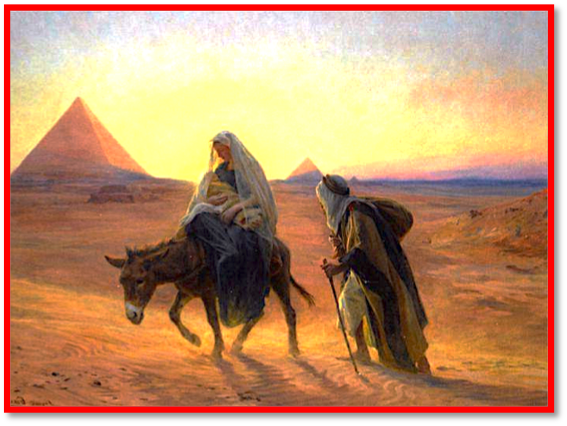
God is not welcome (Feast of the Holy Family Sunday Dec. 30th 2016)

Related imageGod-with-us (Emmanuel) has to flee from the terror of Herod’s brutal regime. Joseph, his protector, guides this Holy Family into exile. At the beginning of the Jesus story, as with the end, God is not welcome. Millions and millions of people are today caught up in the bitter experience of exile, fleeing war and insane violence in Syria and other parts of the world. Like Joseph, Mary and Jesus, they too are running for their lives. Their fate is at the mercy of the rest of the world, which keeps saying ‘never again’, but appears to not really mean it. We welcome Jesus into our world at Christmas; we must continue to welcome Him in the refugee. 


Image result for refugees syriaLord, help us to remember those who tonight will go to sleep unfed and unwelcome, strangers in foreign lands, people who have fled for their lives and are far from their homes. We lift up to you millions in our world who are escaping persecution and conflict, who have fled death, torture or exploitation. So many have suffered so much. Lord Jesus, soften our hearts to their situation, and help us follow your lead in seeking justice and mercy. We pray for an end to the wars, poverty and human rights abuses that drive desperate people to become refugees in the first place. We thank You that you are Lord of all the earth and all its people are loved by you. We pray these things in the name of your son who was himself born into the troubled life of a refugee. Amen (Tearfund). 

Christmas Day (Lk 2:1-14)

Related imageIf you were to put together a guest list for the birth of the Messiah 2000 years ago one might expect political leaders like Caesar Augustus, religious leaders such as the Chief Priests and the Pharisees to be included. Yet for Luke, the shepherds are some of the first to welcome Jesus into this world and are the first ‘preachers’ of the Good News. Many would find it completely shocking that Shepherds would be included. It was a disreputable trade and shepherds were considered ‘unclean’ because of their profession. At first they were terrified, but the angels reassured them: ‘do not be afraid’. The response of the shepherds was immediate: ‘let us go now to Bethlehem and see this thing which has taken place’.

The poor, the marginalised, the outcast will be the first to experience the abundance of God’s hospitality through Jesus and the shepherds come in their name. We are told that people were amazed by the shepherds and their words. Their journey didn’t end in Bethlehem, for them it was perhaps only the beginning as they returned ‘glorifying and praising God’. We are invited to Bethlehem today, to open up our hearts to the One who has come to bring hope and joy. And we return, like the shepherds ‘glorifying and praising God for all they have seen and heard’. We must allow that Love to penetrate our hearts and celebrate with our family and friends the Joy that lives amongst us. And when we have finished celebrating we remember that the real work of Christmas begins once again: 

“When the song of the angels is stilled. When the star in the sky is gone. When the kings and princes are home. When the shepherds are back with their flocks. The work of Christmas begins; to find the lost; to heal the broken; to feed the hungry; to release the prisoner; to rebuild the nations; to bring peace among people; to make music in the heart.” Howard Thurman


Sunday, 11 December 2016

4th Sunday of Advent: Matthew 1:18-24

Joseph
While Luke focuses on the birth of Jesus from Mary’s point of view, Matthew’s Gospel tells the story from Joseph’s. Joseph must have been extremely confused when he learns of Mary’s pregnancy. He plans to quietly ‘dismiss’ her so as not to put her in danger.  Mary’s options were bleak without Joseph; her fate is very much in his hands. He is immediately obedient and says yes to his call. Joseph welcomes Mary and gives this child the name he is instructed: Jesus.

We hear very little about Joseph in the Gospels and he is sometimes a forgotten figure in the Jesus story, yet his decision to follow God’s call is hugely important as he fulfills his promise to protect Mary from danger. Joseph’s ‘yes’ to God sets him on a dangerous path. He must protect his family and this will mean later leaving their homeland, becoming refugees fleeing the terror of Herod.

Each time God speaks to Joseph, it is through his dreams.  The Word of God which comes to Joseph gives him a new meaning and a new mission in life. Today can you reflect on how God speaks to you? In what ways do you hear God’s word? And when you hear God’s word, what is your response? When you have said ‘yes’, where has that led you? Today we can pray for those who are faced with tough decisions and who must chose the more difficult path. It requires strength and bravery.


3rd Sunday of Advent Matthew 11:2-11

 “What did you go out to see?”

Jesus asks the crowd in today’s Gospel why they ran to see John the Baptist? Sometimes when we go to hear a famous speaker or go to someone we admire we are looking for answers. Our expectations are often not grounded in reality. Jesus asks the people what did they expect when they went to see John? Were they looking for someone nicely dressed? No, they were looking for a prophet and John was the greatest of these. Jesus’s words are almost like a eulogy for John.

John announces and makes way for Jesus, marking the end of one era and the beginning of another. John announces a new time. John names the question we so often ask when a new exciting leader comes on the scene: Is this the one? Is this the person we’ve been waiting for? And if it is, how will we know? Our expectations can often be so great because we are constantly in need of renewal. Where in your life today do you need to experience fresh hope and newness?

The Gospel ends with a paradox: John is the greatest that has ever been born; yet the people who are considered the ‘lowest’ or the ‘least’ in this world are considered even greater than John by God. A statement that no doubt would have left a few people scratching their heads.


“O Come, O Come, Emmanuel, come forth from deep within me with Christmas luminous beauty. For my heart has become the sacred crib, the birthing place of God among us.” Edward Hays (Prayers for a Planetary Pilgrim)

Image result for advent 3

Feast of the Immaculate Conception December 8th 2016 Luke 1:26-38

For no word from God will ever fail

Mary must have been terrified at first. Pregnancy outside of marriage meant total exclusion from the community and possible death by stoning. Yet her trust in God is something quite remarkable. In the account of the Annunciation, Luke portrays Mary as the first disciple. As with all disciples, once they hear good news, the must proclaim it and Mary does so in her visit to Elizabeth. These two women, strong, courageous, listening to God’ s Word and proclaiming God’s Word.
The Gospel today is rich, spend some time with it. Perhaps you could focus on a time when you heard and responded to an invitation from God. Who was the messenger? Was there a tough decision involved? An authentic ‘yes’ often requires a struggle and plenty of reflection. We often, like Mary, have many questions and concerns. How did it feel to have this invitation from God? Or perhaps, you were the messenger! What was it like to affirm another and to invite another? What was the response: “I am the Lord’s servant”?


“If I, a little, stumbling faithful soul say “yes”, and others in so many other places do the same, then once again, all Heaven will stand on tiptoe, and all creation hold its breath, as in our day the way is opened up for God to come. I wonder, will God begin again with us this Christmas?”Ruth Patterson 

Image result for annunciation abstract

Second Sunday of Advent 2016 Mt 3:1-12 'Make Straight Paths'

We hear in today’s Gospel that ‘people went out to him from all of Judea…’. John the Baptist was obviously someone who could gather a crowd. There must have been something very attractive about John and what he had to say. He was a man who lived simply; a man not clouded by the non-essentials. Who in our world today do people flock to hear? Who do we look to for guidance, for leadership, for hope? When the religious leaders arrive to the River Jordan, John does not greet them warmly. They have let the people down. He questions the fruit they have produced. It is a reminder of the responsibilities that come with positions of leadership.

This second Sunday of Advent we are called to make straight paths for the coming of our Lord. How we prepare is important. We are waiting, and yes waiting can be frustrating. But waiting can also be a time of growth, of inspiration, of dreaming big dreams and imagining the endless possibilities that might come. We should try not to let go of that hope and inspiration.


John appeals to the community who have gathered to open their eyes, to take the opportunity that is at hand and deal with the spiritual crisis which surrounds them. John is calling for a radical change of heart. The decisive moment is coming where people must take a new path. What can we do to help build communities where leaders produce good fruit? What can we do to respectfully challenge those who do not? Today we pray that God’s Spirit enlivens our heart, our work and our world. 

Image result for advent 2

November 21st 2016 Matthew 24:37-44 Advent 1

You know that feeling of waiting for something or someone? It is a feeling of excitement or maybe anxiety. For most people waiting is not a very popular pastime, it can be seen as a waste of time. If we allow it to, waiting can be a creative time, a time of high alert, where we may even be more aware of ourselves. Our senses are heightened especially when we are waiting for important news or results or waiting on a loved one to call or to arrive. Waiting is not always seen as a good thing but it can be a time for growth. And so, we enter into the season of waiting: Advent. The Gospel reminds us to be alert and use this time to prepare. What will our preparations be like? God is with us in many different ways, trying to catch our attention in the midst of our busy days. As we fight our way through the queues in the coming weeks, can we use 5 minutes, 7 minutes, 20 mins… to stop, be still, to ask God to enter into our hearts and lives once more. 


November 20th 2016: Luke 23:32-43 ‘Christ the King’

This is the final Sunday of Year C and as we draw to a close our reading of Luke’s Gospel we hear the account of Jesus’ crucifixion. It is the Feast of Christ the King and this Gospel certainly gives us an opportunity to lay aside a lot of cultural baggage we may have about kings, leaders and kingdoms. Jesus’ kingdom is unlike the one that Pilate, or many other earthly leaders know. It is a kingdom built on love, service, justice, reconciliation and peace. Few ‘kings’ can measure up to this: responding to violence with forgiveness, giving those with no hope a reason to hope. Today’s Gospel gives a powerful image of Jesus as servant King, like a beacon light for society in today’s world. Who do you know in our world today who is the more living example of this type of kingship, making daily sacrifices in endless service to those around them?

 “The power of truth, of honesty, of forgiveness – with no frills! How different the world would be if it was governed by this kind of power.” Michel de Verteuil