Friday, 18 April 2014

Some Good Friday Thoughts...

The story of the suffering and death of Jesus and the religious
services that go with Good Friday are perceived, by the majority of people in Ireland today, far removed from everyday life. This year, for the first time ever I think, I have been quite removed from the liturgical mayhem involved in celebrating the most important feasts of the Church’s year. This is due to an accident I had a few weeks back which has left me incapacitated for the next few weeks. So, while sitting at home all day instead of the usual marathon session in the parish, I have been asking myself what these three days mean to the rest of the world. You could say, I’ve been having a ‘what’s it all about Ted’ sort of day. Apparently we now live in ‘secular’ Ireland; rescued and saved from the mad Christians. Social media feeds today declared all those still participating in the ‘mad rituals’ ‘out of touch’ but comforted the population by assuring them that we [the mad Christians] would soon be extinct.

I thought I’d read the newspaper to get away from Facebook but Atheist Ireland are mightily peed off in there due to the pubs being closed; this is a terrible "affront to non-believers”. And while they probably have a point where the pubs are concerned, I could not help thinking that a national day of non-drinking probably would not do us any harm; A national ‘non-commercial day’ even or a ‘publican’s day off’. “The Good Friday ban is just one annual note in the constant background noise of religious interference in our public life” (Irish Indo).

In an effort to salvage some sort of prayer during the day, I tuned into Pray as you Go. The words ‘I thirst’ jumped out at me.
I was thrown back to Malawi, where I visited in January, and I recalled the amazing and wonderful people I met in a tiny village in the Dedza region. They thirst every day. The water they use to quench their thirst makes them sick. They walk hours every day to get that water.
Their children are constantly ill and missing school days frequently. In the next 6 years rain-fed agriculture in that region will drop by 50% due to climate change. HIV/AIDS cause further problems and heartache for many in this village.

During the day I was also drawn back to the article about the ‘Homeless Jesus’ statue. This statue, sculpted by Timothy Schmalz to bring attention to the chronic problem of homelessness in Toronto, depicts a homeless person on a bench, covered in a blanket. However, on closer inspection there is a noticeable characteristic: the person bears the wounds of crucifixion on his feet. This is Jesus, the homeless wandering preacher, asleep on a bench outside your house, outside your church.
St. Michael’s Cathedral in Toronto were initially enthusiastic in having the sculpture outside their doors but after some reflection decided against it. Parishioners found it ‘offensive’; how could someone do this to their image of God? It was too ‘provocative’ and ‘not an appropriate image’. But it is real. What on earth are they talking about?

People are crucified in this world every day. Jesus shows us from the cross that suffering is very real: while we tend to focus in on the physical suffering, there was intense emotional suffering also. One wouldn’t blame Jesus if he was relieved that this public ministry episode was coming to an end. After all, it had been an epic failure up until this point and he was betrayed and let down by his closest friends in the end. How many of us have not suffered this disappointment or heartache of any kind?

Good Friday is not the end of the story. Nor is it some archaic set of rituals that have nothing to say to the world today. We can participate in services of all kinds today (some will be better than others) but we are constantly being called to the Good News, the HOPELANDIC news. (Like those who hope that the pubs open tomorrow and have a promise that they will). For Christians around the world a celebration is coming and it has a lot to tell us about our lives and the world that we live in. All things are possible.

I think about that small village in Malawi and I know that there is hope.
This is the bore well that was installed by Trocaire which is providing water to hundreds of people; clean water; water that has not made anyone sick in months; that has kept a lot of children sick free and in school. That well was made possible through the people who donate to Trocaire each year. As Mandy Meade notes: ‘Never doubt that a small group of people can change the world’.

I was also thinking about the irrigation system in a village we visited one day in Malawi. Installed through Trocaire’s partners in Malawi this irrigation system has turned one community from ‘I THIRST’ into a community with two harvests a year. Water flows
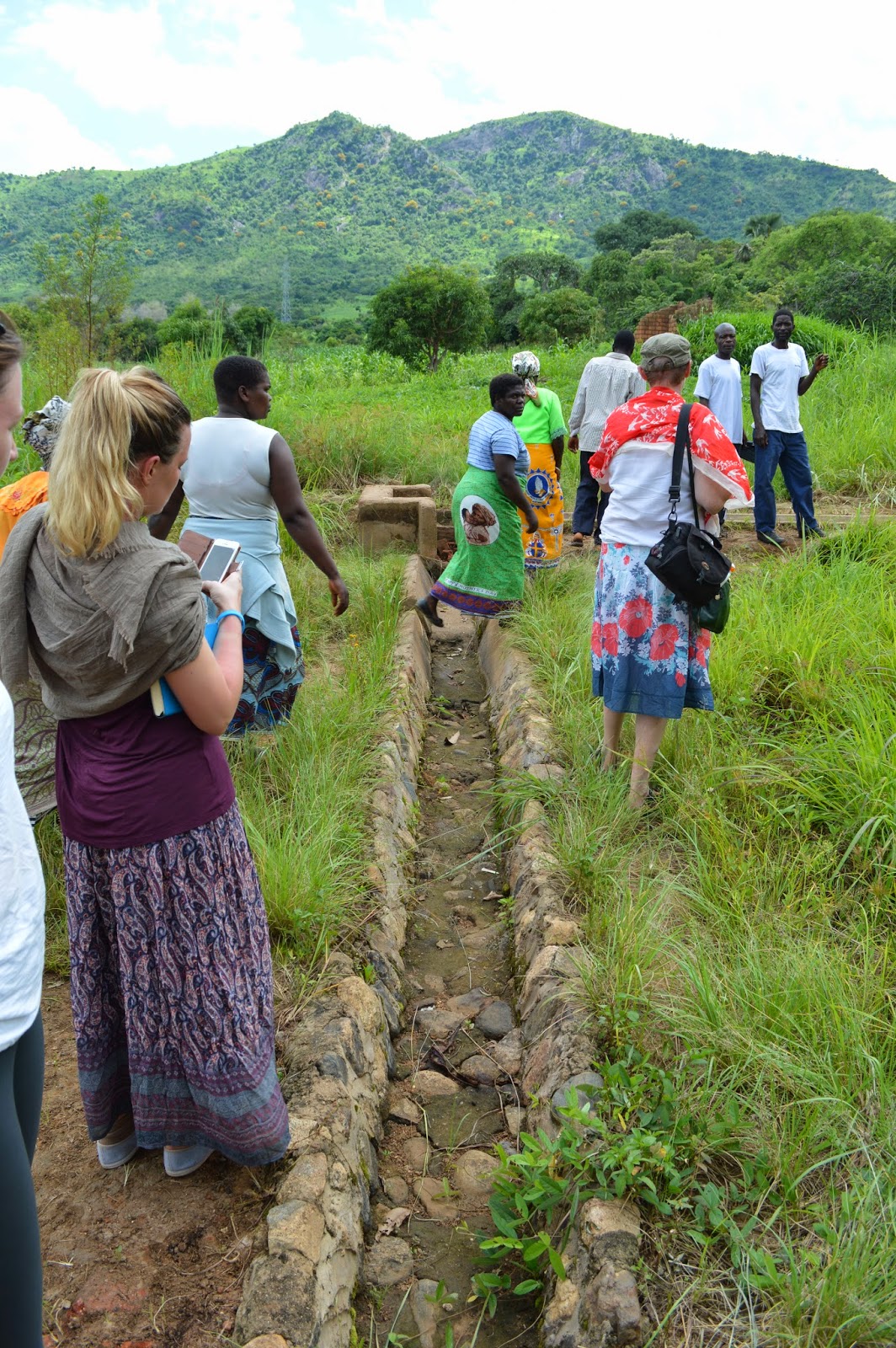
from the mountains three kilometres away into 28 plots of land bringing crops, feeding a fish farm, and saving the people from the annual ‘hungry season’. We see the crucifixion story in the famine and drought; but we are also called to see something greater; to be something bigger; to cause TRANSFORMATION.

The ‘Homeless Jesus’ statue also has found a home; a place where Christians are not afraid to look homeless Jesus in the eye and say – ‘this oppression; this homelessness: “It is finished”. The sculptor has even been commissioned by many parishes in the USA to bring ‘Homeless Jesus’ to their doorsteps.

These three days of the Easter Triduum are the stories of all our lives, whether we want to engage with it or not. They show the world the reality of suffering but also shine a beacon towards hope, resurrection, transformation, and change of the most unimaginable kind.

Saturday, 5 April 2014

Come Forth Lazarus (5th Sunday of Lent 2014)

Jesus is being called back to Bethany into a situation of death. We can think of all of those places in the world which Bethany could represent for us today: Malawi, Syria, Afghanistan, or situations of conflict in our own communities. The tomb and the bandages can represent all of those things which prevent us from being free; which cause situations of despair. We can place ourselves in various positions within this text: the disciples who don’t want to go there; Mary and Martha who are crying out to Jesus; Lazarus who has been placed in darkness, bound and restrained.

Jesus returns to the place of conflict and confronts a culture of death. He orders that Lazarus be unbound, that Lazarus come out of the darkness of the tomb and into the light.
This Lent we are asked to focus particularly on the Global Water Crisis as part of Trocaire's Lenten campaign. We too are sometimes like Lazarus in the tomb when we assume that we can do nothing about a particular situation such as this; it seems too big; too impossible to solve. We can dismiss our own light and remain in the darkness.

However, today's Gospel is a story of liberation. When we feel helpless where situations of injustice are concerned, we must remember that we are full of light; we are being called out of a culture of death; we are powerful beyond measure. Never forget that. We can do small things; we can help to remove the restraints of injustice instead of sitting in the darkness. We can lobby our government on the Climate Change Act; we can be more aware of how we use the earths resources; we can tell the stories of those suffering from drought in Malawi - there is so much we can do.

“Our deepest fear is not that we are inadequate. Our deepest fear is that we are powerful beyond measure. It is our light, not our darkness that most frightens us”. Jesus is calling us out into the light in today’s Gospel. Come forth, Lazarus.

For more information on what we can do in relation to the Global Water Crisis please take a look at Trocaire's website and the "IT'S UP TO US" PAGE: www.trocaire.com/uptous

Saturday, 29 March 2014

‘I want to see, really see’ (John 9:1-41)

The man in the Gospel story for the Fourth Sunday of Lent has had his sight restored. Notice how his sight grows more clearly throughout the account until he finally worships Jesus. We can be blind in many ways through our refusal to believe that we can contribute to positive change in the world. Too often we dismiss these realities by thinking we can do nothing about situations such as the global water crisis. This is blindness. We sometimes hide from the evidence before us and take refuge in prayer. Prayer is important but we must also be open to action. What we do, what we buy, how we use the plentiful resources at our disposal; these all affect the wider global community.

Words attributed to Oscar Romero read: ‘We cannot do everything and there is a sense of liberation in realizing that. This enables us to do something, and to do it very well.’ How can we as parish communities work for justice for our brothers and sisters who are in need? We need to see them, to see their struggle, to see the systems which contribute to this crisis. This week can you gather a small group in your parish and tell the stories used in this year’s Trócaire resource? This is one small way in which we can open our eyes and open the eyes of others. It is not simply about giving money. Today we pray that we can have our sight restored so that, like the man in the Gospel, we can truly worship Jesus.

‘Never doubt that a small group of thoughtful, committed people can change the world. Indeed, it is the only thing that ever has.’ - Margaret Mead.


You can read Enestina's story and learn more about this year's Trocaire campaign through this link: http://www.trocaire.com/lent

Give me this water......

The Woman at the Well (John 4:5-42)
This Gospel passage is a beautiful story of Jesus’ encounter with the woman at the well. It is full of metaphor and you can approach it from many positions: the woman having an encounter, a spiritual experience, direction from God. Or Jesus, a spiritual guide, a teacher, a comforter, challenging. Jesus meets her where she is at. He shouldn’t even have acknowledged her as she is clearly an outcast, a Samaritan woman with a reputation. This woman experiences conversion and growth at this well, not just physical quenching of thirst, but a spiritual one.

We can think of the millions of women and girls who make the hazardous journey to wells every day in search of water.
According to the UN 1.1 billion people are ‘water insecure’. Trócaire is working in Malawi with their local partners to provide water security for many communities. By 2020 it is estimated that water available for agriculture in the region will drop by 50%. We all have a part to play in this with climate change one of the biggest contributors to water shortage. This is a problem that requires more than charity giving to solve. We need to radically change how we use the resources given to us; we need to be more conscious of how much we use; how we recycle; how we can walk or cycle more instead of driving. The woman in today’s Gospel experiences conversion at the well; we too are in need of conversion so that we live more in solidarity with those who are suffering and thirsting for justice.


'Give me this water so that I may not be thirsty’ (John 4:15.

Saturday, 8 March 2014

Lent ~ Transform Your World

Our first stop on this Lenten journey is the ‘wilderness’. Why? We need to remove ourselves from our hectic lives in order to BE STILL, to STOP, to BREATHE. It’s a bit like a stock take. What’s here? What’s here that shouldn’t be? What’s missing? And so we journey today with Jesus into the ‘wilderness’. We should not be afraid of this. It is a ‘Spirit led’ wilderness; God is in control here. Lent calls each of us to transform our lives and our relationships with those we love and cherish; our relationship with the planet; with the global community; our relationship with God.

This Lent we are asked to think especially about water. How we use water; what we waste; how we can live in solidarity with those who have no access to clean water. This is an urgent call. The wars of the future will be fought over water and it is hard for us to imagine. This coming week, as we journey more deeply into the wilderness, focus on how you use water. How many times a day? How much? What is wasted? What is shared? What do you use water for? Where water is concerned how can you serve God more fully? You can calculate your water usage here: www.taptips.ie/water-usage-calculator.htm There are also helpful tips for conserving water in the home and garden.
Lent has begun! We won’t automatically wake up on Easter morning transformed. But we are building, transforming; working in solidarity with our sisters and brothers who thirst for justice in so many parts of the world.


Saturday, 1 March 2014

No worries...

“Seek ye first the Kingdom of God”. It is one of those iconic verses we know so well that it whispers to us again and again. The only danger is it can lose its power and its meaning. We no longer let it shock or surprise us. Seek first the Kingdom of God is Jesus’ ongoing whisper to us. This invitation has an enticing incentive: to be free from all worry; to be free from worldly things; to have complete trust in God. The stunning imagery in this passage of the lilies in the field and how adorned and beautiful they are, are meant to entice us away from worrying about the ‘stuff’ of the world: money, clothes, gadgets, cars. We need the basics of course, but there is a great freedom in putting the ‘stuff’ second and focusing on God’s Kingdom in everything we do: families, friends; looking after our planet; being in solidarity with those who are struggling; standing up for those who experience injustice; loving neighbour and loving God. Today, allow this particular iconic verse to whisper to you again and again; God’s alternative reality.

“The greatest challenge of the day is: how to bring about a revolution of the heart, a revolution which has to start with each one of us?” ― Dorothy Day

Sunday, 26 January 2014

Sunday 26th Jan 2014 ~ Mt.4

Galilee was situated at the extremes of the Holy Land and Matthew stresses Jesus’ decision to start there, almost at the ends of the earth. Jesus is entering into God’s work and we might recall at some time having the sense that we are part of a greater movement, that we are God’s instruments. Matthew sums up Jesus’ message here as “Repent, the Kingdom of Heaven is at hand”. He is calling people to a change of heart, to a new way of seeing and doing things. The Kingdom of Heaven is a vision of what the world would look like if God were in charge instead of human beings.

The story which follows is that of the calling of the fishermen. They responded to Jesus immediately, leaving their boats and nets. Not everyone can drop everything and walk away like they did for a greater cause, but we can certainly learn from their actions. St. Francis of Assisi said: “Preach the Gospel always. If necessary use words”. We might focus on the fishermen’s actions today, stepping out of their boats and following Jesus.

“If we could only see each other as we really are all the time. There would be no more war, no more hatred, no more cruelty, no more greed. I suppose the big problem would be that we would fall down and worship each other… the gate of heaven is everywhere.” Thomas Merton.

World Day for Migrants and Refugees 19th January 2014

John the Baptist is inviting us to look at Jesus, to look closely. He calls Jesus the ‘lamb of God who takes away the sins of the world’. We say these words often at mass and today we are invited to meditate on them more closely. What does it mean? The lamb is one who is sacrificed….the sins of the world are many, broken relationships with one another at every turn. Today we are asked to think especially of Refugees and Migrants and the sins committed against them. The treatment of these groups who are marginalised, exiled from their homes due to war, famine, drought, unemployment is often unjust and is part of what Pope Francis refers to as a culture of ‘slave labour’. These outcast groups are frequently treated with disrespect, racism, condemnation and resentment. How can we reconcile these situations?

Pope Francis’ message for today may guide us closer to understanding the message of John the Baptist in the Gospel: “Migrants and refugees are not pawns on the chessboard of humanity…A change of attitude towards migrants and refugees is needed on the part of everyone, moving away from attitudes of defensiveness and fear, indifference and marginalisation - all typical of a throwaway culture - towards attitudes based on a culture of encounter, the only culture capable of building a better, more just and fraternal world”. In the marginalised can we see Jesus coming towards us and say: “Look, there is the lamb of God”?


Sunday, 12 January 2014

The Baptism of Jesus (Mt 3:13-17)

John the Baptist was driven by one mission: to point people to Jesus, to prepare the way for Jesus. Yet John is uneasy in this account of Jesus’ baptism. The moment has arrived but he is standing before someone much greater than himself and is being asked to minister. John feels unqualified, unworthy of such a task. After some persuasion ‘John gave into him’ and accepted his responsibility. This is a lesson to all of us, not to let feelings of inadequacy stop us from carrying out our various missions and vocations in our lives. Jesus explains to John that this is necessary as a sign for the beginning of his ministry, a public statement of identity.

Pope Francis recently set us some homework: to find out the date of our baptism. He added: “We are all part of the Church. If you say you believe in God, and if you say you believe in God but not in the Church, you're saying you don't believe in yourself, and that's a contradiction. We all are the Church, all of us. From that little child recently Baptised to the bishops and Pope, all of us”. He is reminding us to think deeply about what our baptism means for us, that moment when we were sent out to be part of God’s mission in this world, in our local communities and sent out to minister to those around us, even if we feel unworthy of such a task. Take example from John the Baptist today and don’t forget your homework!

Monday, 6 January 2014

Feast of the Epiphany


We don’t know a lot about the Wise Men. Just to say, we don’t even know how many there were (read the text again). The Greek word Magoi (where we get ‘magician’) signified many things in biblical times including priests from Persia, magicians, philosophers or in this case astrologers. They were ‘seekers’, looking to the skies for signs and guidance and had their hearts and minds set on finding God. They were also ‘outsiders’, coming from a faraway land. Their presence in Bethlehem makes a clear statement: God is for everyone, and not just a select few. Through this account Matthew is stressing the universality of Jesus’ message. They created quite a stir in Jerusalem and Herod saw their arrival as a warning and threat to his power, he was not open to new ideas, caught up in his own position of privilege.

Today, perhaps we can think about our own journeys to moments of epiphany. What guidance had brought us there? What gifts did we leave there? What gifts were we given there?

"Lord, there comes a point in our lives when we finally discover what we want to give our whole lives to…we look back on the long journey that brought us to this point… like the wise men seeing a star as it rose and deciding to follow it… The last part of the journey went quickly, suddenly we knew that we had found what we had been looking for, and it was like coming home, so that we went into the house, fell on our knees and opened our treasures” (Michel de Verteuil)


Sunday, 5 January 2014

Jn 1:1-18 The Word

Jesus is the Word, the Logos, the One coming from the Father to pitch His tent amongst us. John’s Gospel opens with this meditation on the incarnation rather than an account of the birth of Jesus. The Word is that divine energy, Creator of the universe, Being, God, Father and Mother of all things. In Eastern traditions, the word OM is used to denote the same concept and is recited over and over to awaken in people the closeness of God. OM denotes the whole range and possibility of all the sounds that can be made; its meaning is infinite. Today perhaps stay with that Word, inviting Jesus more deeply into your life: Jesus – OM. Íosa – OM. Yeshua – OM.

“He who comes, comes to us now in the silence, in the darkness, in the confusion, in the loneliness as Word and as Light; as Truth and as Love. Emmanuel God-with-us now” (H. Wiggett).


Saturday, 30 November 2013

Advent ~ Swords into ploughshares

Advent has come around again. If we are 'bored' of Christmas by the time it arrives then we haven't done Advent at all. It is a great season of hope, light, joy, and peace. These are not just buzzwords we throw around at this time of year. Imagine what it would mean to breathe each of these gifts into our lives. 'Hope refers to a desire and expectations that goals that seem difficult to achieve may somehow be realized' (Harrington). And today's first reading asks us to dream big. It is from Isaiah and it is powerful. "They shall beat their swords into ploughshares..." (Isa 2:4). Imagine a world where we turned every single weapon into something useful... peacefully useful. It is not as daft as it seems. Imagine a world without weapons. Some people have tried it. Take a look at this pic of musical instruments made from weapons....

Or this one:


Or pull up a seat and look closer at this:

If you want to hear more about a community who spend some of their time turning AK47s into gardening tools, then check this out: http://www.redletterchristians.org/beating-ak47s-into-shovels/

The cliché is that 'another world is possible'. This is what Advent tells us and dares us to believe. Pray for peace this Advent season, peace in our hearts, our communities, our families.... oh and 'happy new church year'. SHALOM. MARANATHA.

Thursday, 28 November 2013

November 24th ~ Christ the King

What is our image of a King? The picture painted by Luke in today’s gospel is hardly the stuff of kingship! Or is it? This account of Jesus’ death gives us an opportunity to lay aside a lot of cultural baggage about kings, leaders and kingdoms. Jesus’ kingdom is unlike the one that Pilate, or many other earthly leaders know. It is a kingdom built on love, service, justice, reconciliation and peace. Very few of today’s so called kings can measure up to this: responding to violence with forgiveness, giving those with no hope a reason to hope.
Look at the following examples from the past century and ask who are the more living examples of this type of kingship: Mahatma Gandhi, Pope Francis, Nelson Mandela, Mother Teresa, local community leaders who make daily sacrifices in endless service to those around them.

We sometimes ask where is God? Today we are given an answer: God is on the cross, in a broken body asking us to climb up there with him and to look at the world from an entirely different perspective. Today’s Gospel gives a powerful image of Jesus as servant King, like a beacon light for society in today’s world.

“The power of truth, of honesty, of forgiveness – with no frills! How different the world would be if it was governed by this kind of power.” Michel de Verteuil

Sunday, 17 November 2013

Fashion Changes; Style Endures Luke 21:5-19

We are reading the final chapters of Luke’s Gospel for Year C. Jesus is in Jerusalem and the passages we hear are talking about end times. The people gathered are obviously excited having seen how magnificent the Temple is, having come ‘up from the country’ and Jesus is trying to calm them down. The time for excitement might not be just yet. Jesus reminds them, and us, that these things are short-lived and we should not be too bothered about ‘fine stonework’ and ‘votive offerings’. These things do not last.
Jesus’ main warning is not to believe many who will come claiming to know when the end times will be.

A series of quotations from Jesus follows in which he gives comfort to the people about various crisis that will happen. Luke is almost giving us a subsequent history of the Christian community. It is not all doom and gloom, but we need to take perspective and look at the bigger picture. Endurance is the message of today’s gospel. The people of Jerusalem will witness the destruction of the Temple, the disciples will face persecution, people of faith will have tough times ahead. Whatever crisis may come, Jesus is affirming us to keep going, to stay focused and not be afraid.


“Lord, when we are young we think that we become great through our achievements. Life has taught us the truth of Jesus’ words: it is by endurance that we win our lives” Michel de Verteuil

Saturday, 9 November 2013

Will my body look old in this? Luke 20:27-38

This Sunday's Gospel is difficult. The Sadducees, are trying to trap Jesus with questions about resurrection, even though they did not believe in resurrection. They are specifically concerned with childless women marrying their brother-in-laws to keep the deceased husbands name alive. Their case-study is slightly absurd and exaggerated. A situation where women can be ‘given’ and owned will not exist in the next life, nor will any other instances of slavery or the realities of this world. In a place of peace, justice and freedom, people are not ‘owned’ or ‘given’. We should not be too preoccupied with questions like theirs: ‘Whose wife will she be?’ or ‘Will I look old?’ ‘Will I have a body?’ We can trust in God.

We could interpret ‘taking wives and husbands’ as the many projects, titles, schemes we use to promote our own interests as ‘children of this world’. ‘Children of the resurrection’ don’t do this. They make huge sacrifices for people they work with, whether on the margins, for the liberation of people around them and those who are oppressed in any way. They ‘cannot die’ even though they can be condemned by society. You might recall someone who has passed away, but who is very much alive because of their influence on people, their generosity and kindness and the difference they made to those around them. They are ‘children of the resurrection’.

“You were born a child of light’s wonderful secret— you return to the beauty you have always been.” ― Aberjhani,.

Saturday, 2 November 2013

Zacchaeus Restored

It was because of the crowd that Zacchaeus could not see Jesus. Today’s Gospel brings up questions for us about who we are preventing having an experience of Jesus because we deem them unworthy or ‘sinner’. Zacchaeus as a chief Roman tax collector would have been seen as part of the Roman regime and an exploiter. Zacchaeus does not let that stop him, and climbs a tree to make sure he can get a glimpse of the preacher that everyone is talking about. Jesus seeks out the lost and sees Zacchaeus. He reaches out to him immediately and with urgency saying he ‘must’ stay at Zacchaeus’ house. It is God’s plan, it is a necessity.

Zacchaeus offers the strictest requirement in the OT for restitution ‘four times the amount’. But notice that Jesus reaches out before Zacchaeus offers compensation for his crimes. God’s love is unconditional and eternal. The encounter with Jesus has led Zacchaeus to be witness to restoration and solidarity. He wants to restore justice to the situations he has created. Whether it was the crowd, greed, politics or corruption that was preventing Zacchaeus from seeing Jesus, he has been welcomed back to the table with urgency. Jesus is waiting to be invited in ‘today’. The complaints and negativity continue in the background, suggesting he is not good enough… but none of that matters. This man is a ‘son of Abraham’. It was the affection of Christ, not the condemnation of the town that reversed the situation.

Sunday, 29 September 2013

The Rich Man and Lazarus Luke 16:19-31

A major theme in Luke’s Gospel is ‘reversal’. We see a clear example of this in today’s Parable of the Rich Man and Lazarus. Notice how the rich man is not given a name. This is significant as names were important for people who were considered to be of high status, it gave them recognition. It is the poor outcast beggar who does have a name – Lazarus. Names are significant. Lazarus means “God helps”. The lives of these two men are radically different. The rich man wears purple robes, the most expensive colour dye at that time, and he feasts every day. A gate also separates these two men, the rich man is far above Lazarus in terms of status and wealth. The rich man does not even see Lazarus. When they die, their situations are completely reversed and we are reminded of the Magnificat in the first chapter of Luke (1:52-53) “He has brought down the powerful from their thrones, and lifted up the lowly; he has filled the hungry with good things, and sent the rich away empty”. The rich man is unwilling to change, even in the afterlife he wants Lazarus sent, ordered, to go to his brothers. It is not proof or special signs that they need. Their vision has been blinded by wealth and dreams.

“The moment we cease to hold each other, the moment we break faith with one another, the sea engulfs us and the light goes out” (James Baldwin).


Monday, 23 September 2013

Sunday 22nd Sept ~ Gospel Economics

One of the most scandalous economic stories in the Gospels is the teaching in today’s parable. A manager is about to get fired by the CEO because he has not made the highest profit. But is Jesus really condoning using money to buy friends and stealing from employers?! What is the manager doing? He is telling his debtors to falsify their bills so that they can be free from their debt. Some owe huge amounts. The manager is using the position he is in to recklessly release people from debt, to even up the tables. This will of course win him everlasting friends, their hearts and minds.

The manager is praised for his astuteness, he has his priorities straight, he is happy to let debt go, to redistribute the load. Ok there is still some self-interest there but Jesus is telling us that the only value the money really has is in the way it is disposed of – to make friends with the poor. The manager won’t be the most successful man on the planet compared to the ‘children of the light’ who are more concerned with accounts than with real people. He can be trusted to value what is really important. Yes he is a bit of a scoundrel, but Jesus liked scoundrels, once their efforts were put to good use.

“If a white-collar criminal is smart enough to pull off this sort of stunt, imagine what the children of God can do! It is an invitation to holy mischief.” (Shane Claiborne)

Saturday, 14 September 2013

Lost and Found: Lk 15

In today’s Gospel, we hear three parables, all about things that are lost and found. We see the ‘searcher’ portrayed as male and female as Luke strives for gender equality followed by the very human story of the Lost Son. These three parables of things lost and found emphasise the unending forgiveness of God and his rejoicing when we return to Him. But as with all parables, we are left thinking and wondering, disturbed even. A sheep and a coin we can rejoice over, but when it is a person who has done us harm, hurt us in some way, it is much easier to behave like the elder brother in the third parable.

The elder brother tries to disown his younger brother by saying ‘this son of yours’… the response he is given is ‘this brother of yours… was lost and now is found’. God restores all things, the sheep to the shepherd, the coin to the woman, the son to the Father and it is a frantic search in each parable. We are encouraged to search, to be ‘seekers’, to discover the lost and, when we need it, to let ourselves be found.

“The sheep may be lost in the fog or wandering aimlessly but the shepherd is always in search of it. No matter how desperate our plight we may always rely on the love which will never tire of seeking us out.” (Cardinal Basil Hume)

Saturday, 7 September 2013

The Cost: Luke 14:25-33

This account is troubling. Surely Jesus does not expect us to hate our families, friends and even ourselves in order to be his followers? Maybe he didn’t really mean it? Crosses and possessions, we can understand that bit. Perhaps Jesus is making a point here about how we attach ourselves to things and to people, even to images of ourselves. Attachment can cause all sorts of suffering in our lives. If we are to grow, we move on from the comfortable. If we are to be agents of change, we let go of the familiar, and that can often be painful whether it be old rituals, a group we were once part of, friends who don’t understand. The two parables in this story remind us to think things through and weigh up the cost involved. This Kingdom of God stuff does involve sacrifice even though we would prefer to skip the bits that make us uncomfortable. It’s not so simple Jesus…. I find it difficult… and sometimes it feels like 20,000 against 10,000.

So this passage is a call to conversion and we read it from the various forms of discipleship that we are in: parenting, advocacy, political life, social work and so on. In order to achieve our goals we make sacrifices. Jesus ‘turned to them’, he is speaking from experience. Jesus’ words are harsh, but spend time with this text today, his words can be interpreted as passionate, urgent, focused and even offer us a great freedom and encouragement in whatever form of discipleship we have chosen.